What BBQ Island Construction Actually Involves
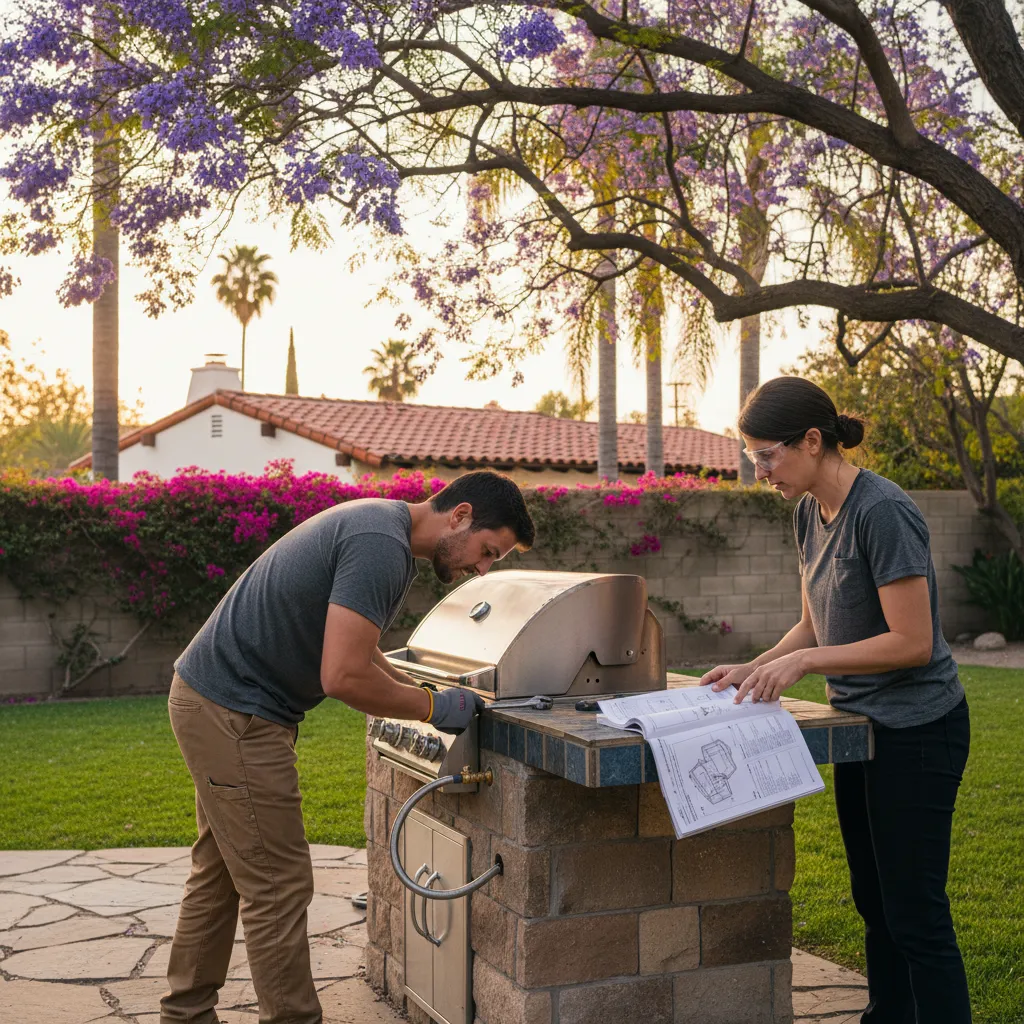
Most people picture a grill sitting on a countertop. That's maybe ten percent of the job. BBQ island construction is really about building a permanent outdoor structure from the ground up, and every piece has to work together or you'll have problems down the road.
It starts with the foundation. Here in Van Nuys, soil conditions vary a lot block to block. Some spots near Lake Balboa have sandy soil that shifts, others are packed clay. Either way, your island needs a solid concrete base or it'll crack within a year. It shows up every single week with islands other folks built on bare dirt or pavers.
The Build Itself
Once the base is set, here's how the rest comes together:
- The island gets framed using steel studs or concrete block, depending on the design and your yard layout.
- Gas lines and electrical get roughed in before anything gets closed up.
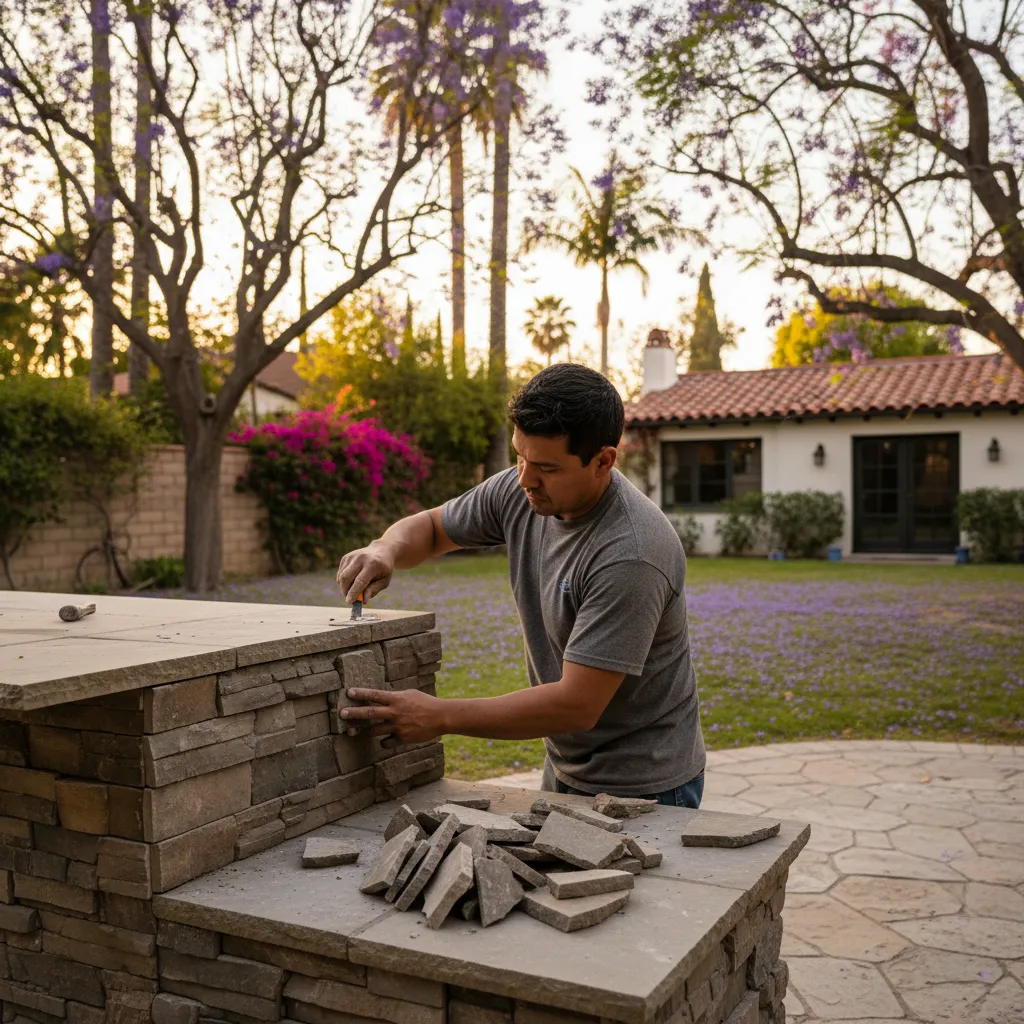
- A scratch coat goes on, finished with stucco, stone veneer, or tile to match your home's look.
- Countertops go on next. Granite and concrete are popular, but quartz countertops work too.
- The grill, burners, doors, and any built-in features get dropped into their cutouts and secured.
- Final hookups happen. Gas, electric, sometimes plumbing if you want a sink.
That's not a weekend project. A proper island takes planning, permits, and skilled hands.
And here's what surprises most homeowners. The stuff you can't see matters more than the stuff you can. Ventilation behind the grill prevents heat damage to your countertops. Proper drainage keeps water from pooling inside the structure during our rare but heavy rains. According to the National Fire Protection Association, clearance requirements around gas appliances aren't optional, they're code.
Not sure if you need permits for your yard? That's actually pretty common. In most cases across Van Nuys, yes you do. A contractor handles the permit process so you don't have to chase down paperwork at the building department.
The finished product looks like it grew out of your patio. But underneath, it's engineered to handle years of heat, weather, and weekend cookouts without falling apart.
Choosing Materials That Hold Up in the San Fernando Valley
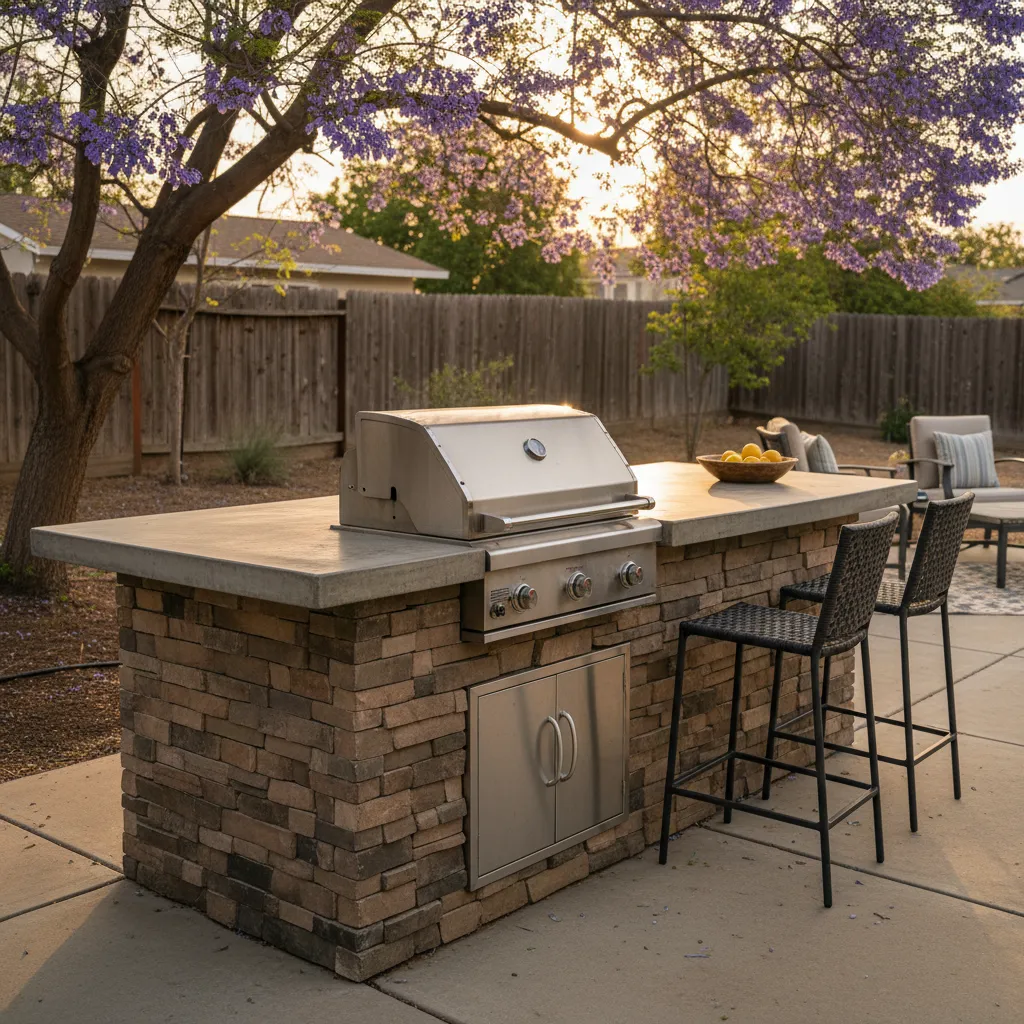
Van Nuys gets hot. Really hot. Weeks of 100-degree-plus days every summer, and that heat doesn't just affect you. It affects every single material in your backyard.
So when it comes time to plan a BBQ island construction, materials are the first real conversation. Not the grill. Not the layout. The stuff that has to survive year after year without cracking, fading, or falling apart.
The Frame
A good contractor builds every island frame with steel studs or welded steel. Wood frames rot, they attract termites, and they don't handle heat well. Steel gives you a frame that won't warp when your grill pushes 600 degrees on one side while the Valley sun bakes the other. More often than not, when someone else's island needs fixing, the problem started with a wood frame.
The Finish
For the exterior, you've got a few solid options that actually work here:
- Natural stone or stacked stone veneer. Handles UV and heat without fading.
- Stucco with a color-matched finish. Blends with most Van Nuys homes and holds up well.
- Porcelain tile rated for outdoor use. Won't absorb water or crack in temperature swings.
A good contractor steers people away from cheap ceramic tile or thin veneers that peel after two summers. You'll save money upfront, you'll spend double fixing it later. Over near Lake Balboa, an island facade barely 18 months old had to be replaced. The original builder used interior-grade tile. It looked great for about one summer.
Countertops and Concrete Board
Granite and quartz countertop installation are both popular for island tops. Granite handles direct sun a little better. Quartz gives you more color options but needs shade or a patio cover above it to prevent discoloration over time. A contractor walks you through what makes sense for your specific setup.
Underneath everything, cement backer board rated for exterior use goes down. Not drywall. Not plywood. This is the layer nobody sees, but it's what keeps your island solid five and ten years from now.
And here's the thing most people don't think about. Your island sits on concrete. If you don't already have a concrete patio installation in place, a contractor handles that too. The base matters just as much as the build on top of it.
Permits, Gas Lines, and Code Requirements in Los Angeles
This is the part that trips people up the most. And it's the reason a lot of DIY BBQ island projects in Van Nuys stall out halfway through.
Los Angeles County requires a building permit for any permanent outdoor structure that includes gas or electrical connections. Your BBQ island falls into that category. A contractor handles the permit process for every build, because one missed form can delay your project by weeks. The City of LA's Department of Building and Safety has specific rules about setback distances, ventilation for gas appliances, and structural footings. Skip any of those and you're looking at a failed inspection.
Gas lines are where things get serious. Here's what's involved:
- The contractor assesses your existing gas meter capacity to confirm it can handle the added BTU load from your grill and side burners.
- A licensed plumber runs a dedicated gas line from the meter to the island location, with a shutoff valve within reach.
- The line gets pressure-tested before anything gets buried or enclosed.
- A city inspector signs off on the gas work before the island walls close up.
More often than not, homeowners near Lake Balboa or the Sherman Oaks border already have enough gas capacity. But older homes sometimes need a meter upgrade, and a contractor catches that early so it doesn't surprise you mid-build.
Electrical is another piece. If your island includes lighting, a rotisserie motor, or an outdoor refrigerator, you'll need a permitted electrical circuit with GFCI protection. According to the National Fire Protection Association, outdoor cooking equipment must maintain specific clearance distances from combustible materials. That means your island's placement on the patio matters just as much as how it's built.
A contractor pulls every permit and schedules every inspection. You don't sit on hold with the city or guess which forms to fill out. An experienced contractor has been through this process hundreds of times across Van Nuys, and knows exactly what inspectors want to see before they show up. That's the difference between a smooth build and a frustrating one.
The BBQ Island Construction Process, Phase by Phase
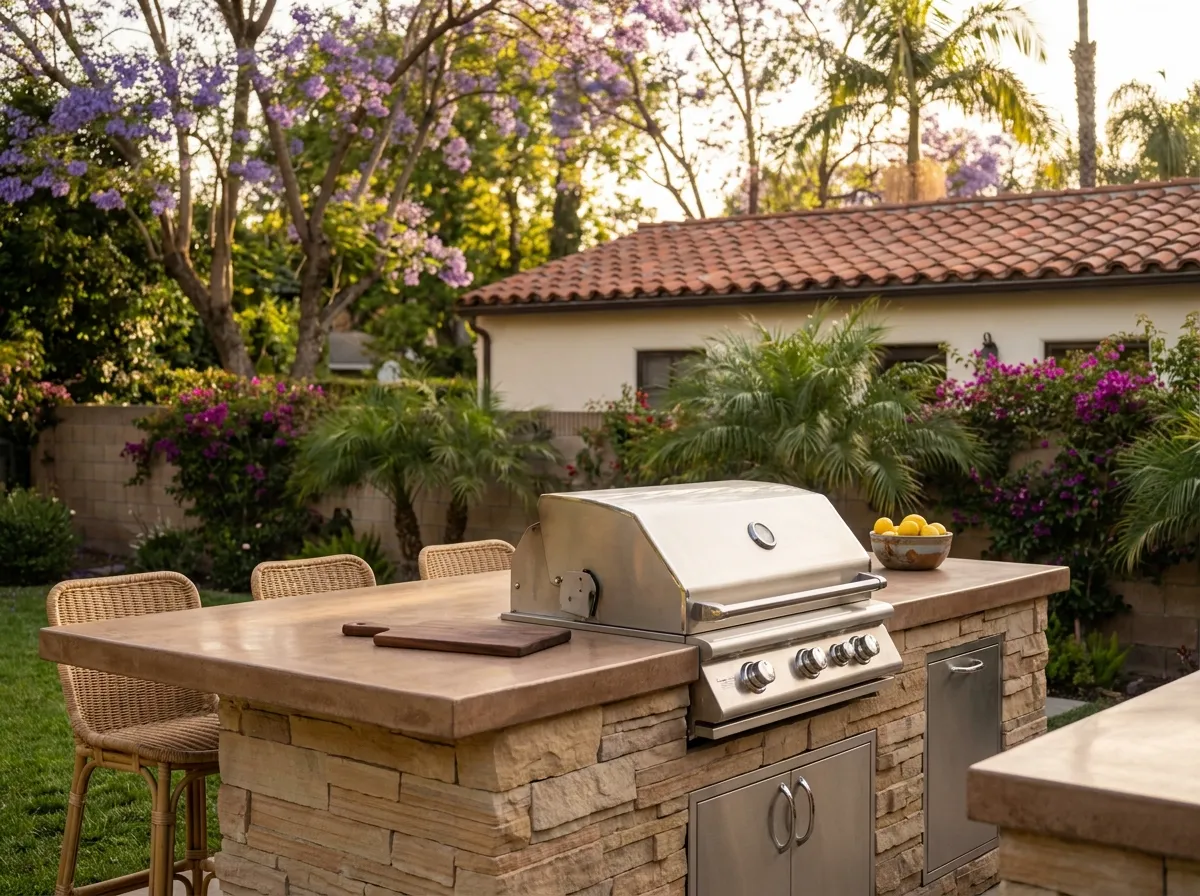
People always ask how long this takes and what's actually happening at each step. Fair question. BBQ island construction isn't just stacking blocks and dropping in a grill. There's a real sequence to it, and skipping steps is how you end up with cracks, leaks, or an island that shifts on you after one Valley summer.
Here's how an island gets built across Van Nuys, start to finish:
- Site layout and base prep. The exact footprint gets marked on your patio or yard. The ground gets leveled and compacted. An existing concrete patio gets checked for cracks and slope. Soft ground means a small pad gets poured first.
- Steel framing. The skeleton gets built out of galvanized steel studs. Not wood. Steel won't rot, warp, or attract termites. Every cutout for your grill, doors, and drawers gets framed to exact specs right now.
- Utility rough-in. Gas lines, electrical for lighting or rotisserie outlets, and sometimes a water line for a sink. This is where permits matter. A contractor pulls them so you don't have to worry about it.
- Sheathing and scratch coat. Cement board goes over the frame, then a base coat of mortar. This is the foundation for whatever finish you choose.
- Finish material. Stone veneer, stucco, tile. Whatever matches your house and your style. Stacked stone shows up a lot near the Lake Balboa side of things, plenty of smooth stucco closer to Sherman Way.
- Countertop and component install. Your granite or concrete countertop drops in. Then the grill, access doors, trash pullouts, and any other built-ins get set and secured.
- Final connections and testing. The gas gets hooked up, every burner tested, electrical checked, and doors adjusted so they swing right.
The whole process usually runs two to three weeks depending on complexity. More often than not, the thing that adds time is the finish material, not the build itself.
But here's what matters most. Each phase gets checked before the next one starts. Framing doesn't get covered up until rough-in passes inspection. Finish doesn't go on until the scratch coat has cured properly. Rushing any of this means problems you won't see for six months, and by then it's expensive to fix.
Want to talk through what your build would look like? Give us a call.
What Happens After Your Island Is Built
A lot of people think the job ends when the last tile goes on. It doesn't.
Once a BBQ island construction wraps, the contractor walks through every single detail with you on-site — firing up the grill, testing the gas connections, checking the burner ignition, and running water through the sink if you've got one. You'll know exactly how everything works before anyone leaves your yard. A good contractor does this on every project across Van Nuys because a five-minute walkthrough saves a dozen phone calls later.
Your First Few Weeks
New stucco and concrete need time to fully cure. That's normal. You might notice hairline surface cracks in the first couple weeks, they typically seal themselves as the material settles. Don't panic if you see them. Every customer hears the same thing.
Here's what to do for the first 30 days:
- Avoid pressure washing the exterior finish for at least three weeks.
- Season your grill grates with oil before the first cook.
- Keep your countertop sealed if you went with natural stone.
- Run your gas line at low flame for 10 minutes before cranking it up the first time.
- Check that cabinet doors and access panels open and close smoothly.
More often than not, customers in the Lake Balboa area are cooking on their island the same weekend it's finished. That's the goal.
Long-Term Care
Your island sits outside year-round. Sun, rain, Santa Ana winds. So basic upkeep matters. Wipe down your countertops after each use. Cover the grill when it's not in use. And if you have a built-in refrigerator or ice chest, clean the drain line every few months.
But here's what most people don't realize. A well-built island in Van Nuys shouldn't need major repairs for years. The steel frame, concrete block, and proper waterproofing a good contractor uses are built for this climate. Not for a showroom.
If something does come up down the road, a local contractor answers the phone. According to the National Association of Home Builders, outdoor structures built with reinforced masonry can last 50 years or more with basic maintenance. That tracks with what the field shows every day.
You're not just getting a cooking station. You're getting something your family will actually use for a long time.