Why Van Nuys Homeowners Are Choosing Composite Over Wood
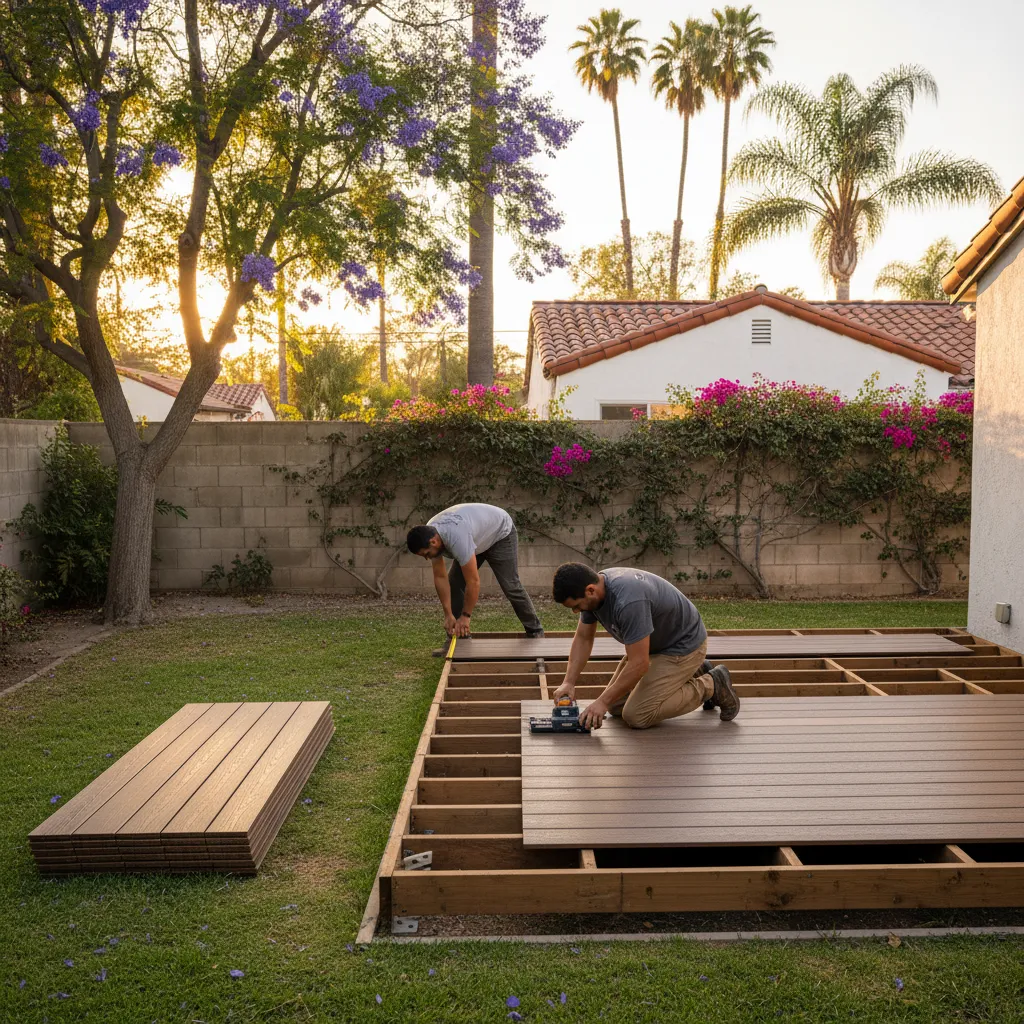
People ask this almost every day. "Should I go wood or composite?" Five years ago it was a closer call. Not anymore.
The San Fernando Valley heat does real damage to traditional wood decks. Redwood boards in the Lake Balboa area, only four years old, turn up already cracked and splintering from sun exposure. That's money down the drain. Composite holds up because it doesn't dry out, split, or warp the way natural lumber does under constant UV.
But it's not just about the sun. Think about what a wood deck actually costs you over time. You're staining every year or two. You're sanding. You're replacing boards that rot near the posts. Composite deck installation removes almost all of that ongoing work from your life. You hose it off once or twice a year, that's basically it.
Here's what's pushing Van Nuys homeowners toward composite right now:
- No annual staining, sealing, or sanding required
- Resists termites, which are a constant problem in the Valley
- Won't splinter, so it's safer for kids and pets
- Keeps its color for years without fading to gray
- Adds real resale value because buyers know maintenance is minimal
According to the National Association of Realtors, outdoor living projects like deck additions consistently rank among the top improvements for cost recovery at resale. That tracks with what shows up locally. Buyers in Van Nuys want move-in-ready outdoor space, not a deck that needs immediate work.
There's a practical side too. Composite boards come in consistent sizes and colors. No sorting through warped lumber at the yard, no rejecting half a delivery because the grain looks off. A crew can work faster and cleaner with materials that show up ready to install.
And once people hold a composite board and a pressure-treated pine board side by side, the decision makes itself. The composite feels solid, looks finished, and you don't get a splinter just picking it up. That pretty much tells you everything you need to know.
Heat, Sun, and Board Selection for the San Fernando Valley
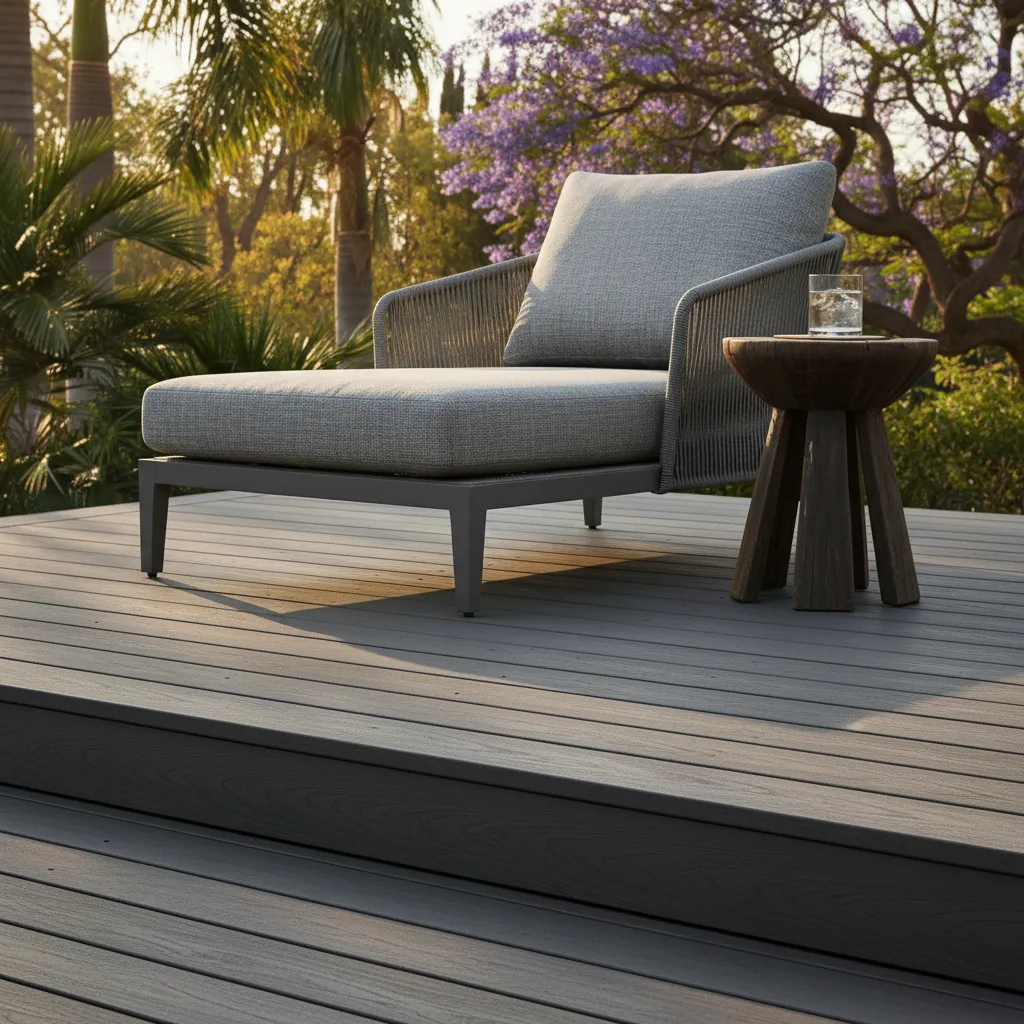
Summer surface temps on a south-facing deck in Van Nuys can hit 150°F or higher. That's not a guess. Point an infrared thermometer at boards in July and the numbers climb fast. So the material you pick matters more here than it does in cooler climates.
Not every composite board handles heat the same way. Some absorb it fast, hold it long, and feel like a griddle under bare feet. Others reflect more energy and cool down quicker once the sun shifts. The difference comes down to cap layers, core density, and color.
What Actually Affects Heat on Your Deck
Here's what every homeowner near Lake Balboa or anywhere else in the valley should know before picking a color swatch:
- Darker boards absorb more heat. A charcoal or walnut tone can run 20 to 30 degrees hotter than a light gray or sandy shade.
- Capped boards with a polymer shell resist fading and stay cooler than uncapped options.
- Boards with a higher percentage of recycled wood fiber tend to retain heat longer than those with more plastic content.
- Matte finishes reflect less UV than lightly textured surfaces, which can also affect how hot the deck feels.
It happens every single week. A homeowner falls in love with a dark espresso sample in the showroom, then learns what that color actually feels like at 2 p.m. in August. Most people end up going one or two shades lighter once they understand the tradeoff.
UV exposure is the other big factor. The San Fernando Valley gets over 280 sunny days a year according to NOAA data. That constant bombardment breaks down cheaper boards fast, causes color shift, and weakens the surface over time. A quality capped composite resists that breakdown, but board orientation still matters. A good contractor plans layouts so the longest sun exposure hits the most durable face of each plank.
And here's something people don't think about. The framing underneath affects heat too. Proper airflow beneath the boards lets trapped heat escape instead of baking from both sides. Joist spacing and ventilation gaps get set for Van Nuys conditions specifically, not just a generic install manual from the manufacturer.
Picking the right board isn't just about looks. It's about comfort three months from now when you're standing out there barefoot with a cold drink.
The Subframe Is Where a Composite Deck Succeeds or Fails
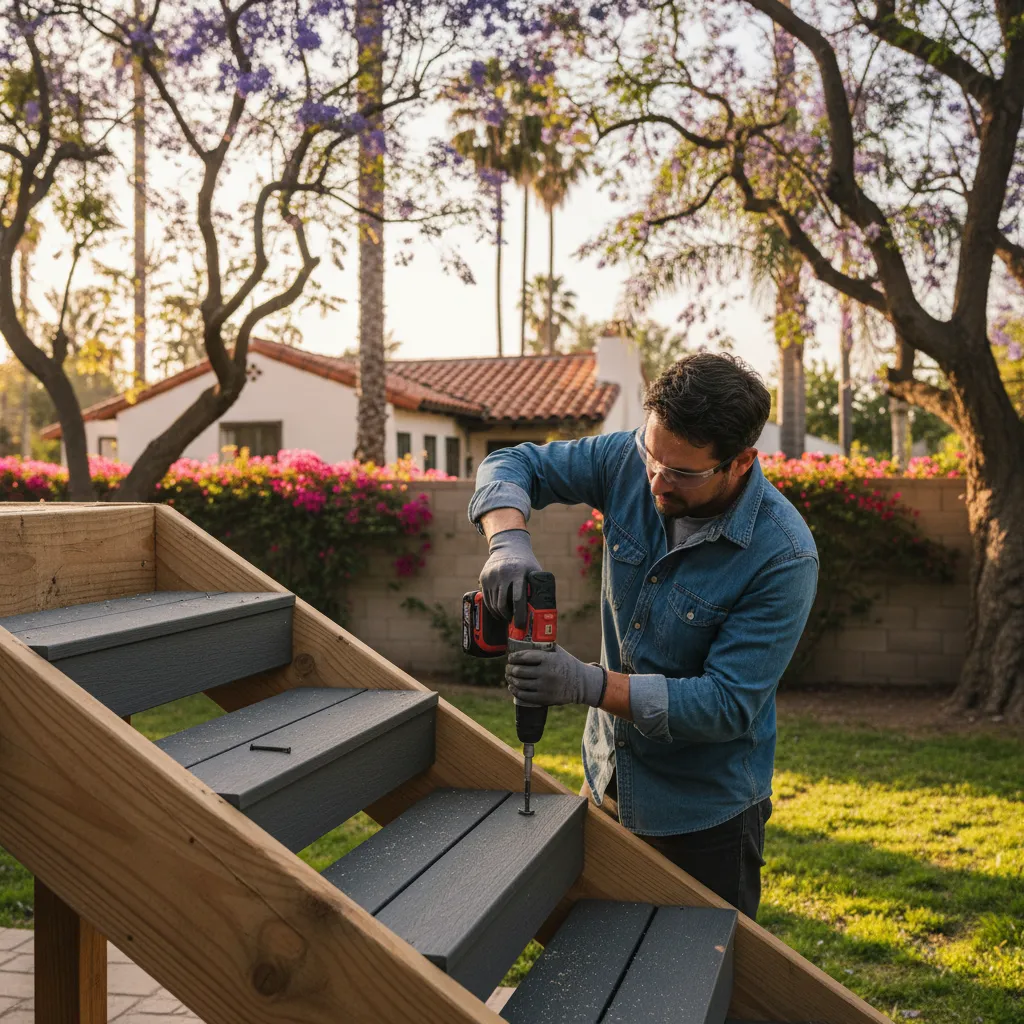
Here's what most people don't realize. The boards you walk on are only half the job.
The subframe, the skeleton underneath, does all the heavy lifting. Get it wrong and your composite deck installation will feel bouncy, sag over time, or pull away from your house. It shows up every single week on older builds across Van Nuys. Someone cut corners on the frame, and now the whole surface is warping even though the boards themselves are fine.
What Goes Into a Proper Subframe
Composite boards don't behave like wood. They expand and contract more with heat, and the San Fernando Valley sun is no joke. So the framing has to account for that movement. A composite build uses tighter joist spacing than you'd see on a traditional wood deck construction project. Twelve inches on center is standard for most composite builds, not sixteen. That smaller gap keeps the surface firm underfoot and prevents flex between joists.
Here's the typical build sequence for the subframe:
- Set and level the posts on properly sized footings, confirmed by local soil conditions.
- Install the ledger board against the house with lag bolts and flashing to prevent moisture intrusion.
- Run the beam across the posts, crown side up.
- Hang joists at 12-inch spacing using code-rated hangers.
- Add blocking between joists for extra rigidity at seams and edges.
- Apply protective tape along the top of every joist to guard against moisture damage.
That last step is one most homeowners never hear about. Joist tape keeps water from sitting on the wood frame and rotting it out from underneath. Your composite boards resist moisture, but the lumber holding them up doesn't.
And the ledger connection matters more than anything. A bad ledger attachment is the number one cause of deck collapses in the U.S., according to the North American Deck and Railing Association. In neighborhoods like Lake Balboa, stucco walls often need extra prep before the ledger goes on. You can't just bolt through stucco and call it done.
Think of it this way. Nobody sees the subframe once the deck is finished. But it's the reason your deck still feels solid ten years from now, not just the day it's built.
Pulling Permits in Van Nuys Before Work Begins
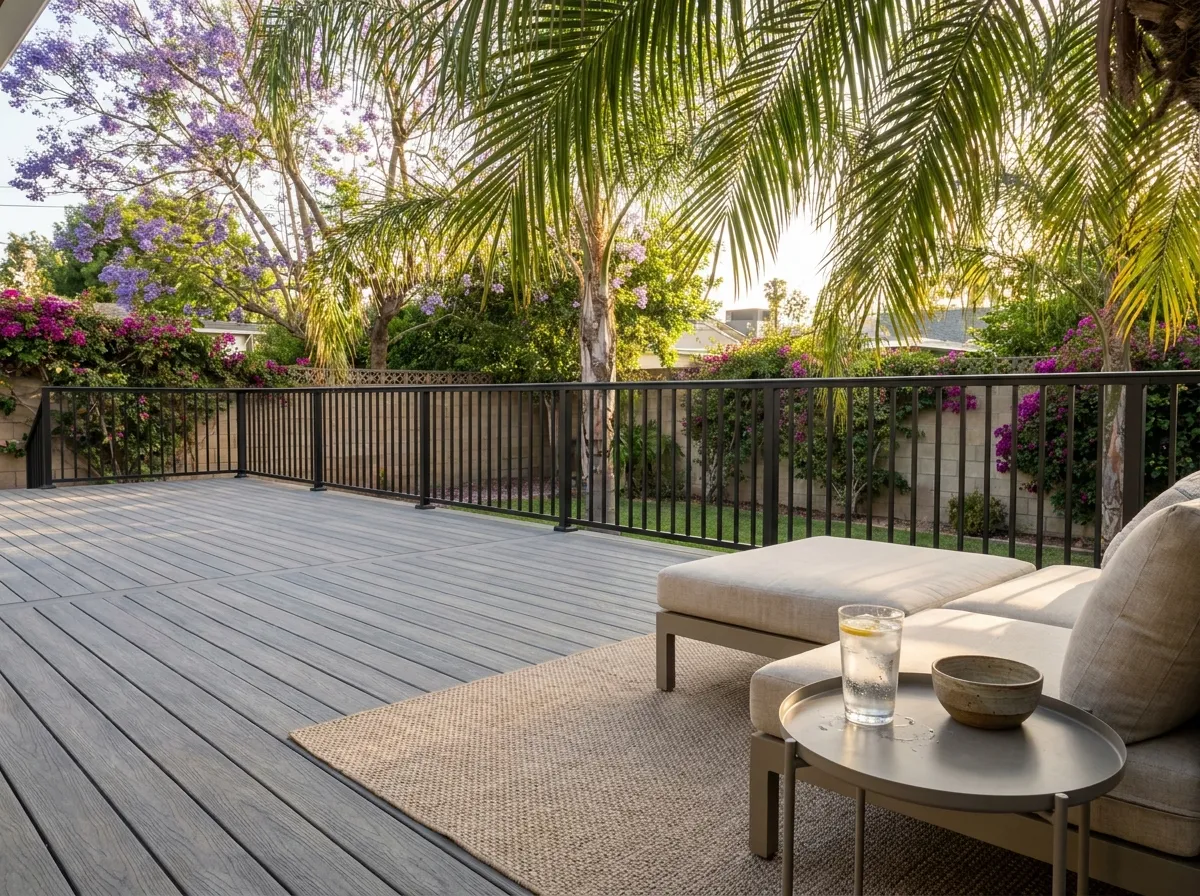
Skip the permit and you're asking for trouble. Homeowners in Van Nuys get hit with stop-work orders halfway through a build. That's money sitting in the sun doing nothing.
Any composite deck installation that's attached to your home or sits more than 30 inches off the ground needs a building permit from the Los Angeles Department of Building and Safety. Even freestanding decks sometimes need one depending on size and location on your lot. The city treats your deck like a structure, because it is one.
What the Permit Process Looks Like
Here's how a contractor handles it from start to finish:
- The contractor draws up a site plan showing your property lines, the house footprint, and where the deck will go.
- Structural details get prepared, including footing depths, joist spacing, and ledger board connections.
- Everything gets submitted to LADBS, either online through their express permit system or in person at the Van Nuys Civic Center on Sylvan Street.
- Once approved, the permit card gets posted on-site before any digging starts.
- Inspections get scheduled at each required stage so the city signs off on the work as it progresses.
Most straightforward composite deck projects get approved within a few weeks. But if your property sits near a hillside zone or has specific setback restrictions, it can take longer. Properties over near Lake Balboa sometimes have additional drainage requirements that need to be addressed in the plans.
More often than not, the permit itself isn't the hard part. It's knowing what the inspector wants to see.
That's where experience matters. Contractors pull permits for decks across every type of lot in this area — single-story ranch homes, two-story builds with second-floor deck access, tight side yards where setbacks get tricky. A good one knows what LADBS expects and builds the plans around that from day one. A licensed general contractor pulls the permit under their own name and takes full responsibility for passing every inspection.
And here's something people forget: a permitted deck adds real value to your home. An unpermitted one can kill a sale. The permit protects you now and later.
What the Installation Process Looks Like Step by Step
People always ask how long this takes and what actually happens on their property. Fair enough. Here's exactly how composite deck installation goes from day one.
- Site prep and layout. The crew marks the deck footprint in your yard, checks for utility lines, and confirms the grade. Slopes are common in Van Nuys, especially near the hillside areas of Lake Balboa. Every inch of elevation change gets accounted for before anything gets built.
- Concrete footings. Footings get dug and poured to meet local code depth. These anchor everything. Skip this step or cut corners here and the whole deck shifts within a year.
- Structural framing. Pressure-treated lumber goes down as the substructure. Beams, joists, and ledger boards get set at precise spacing. Joist spacing matters more than most people realize, it controls how solid the deck feels underfoot.
- Composite board installation. Now the actual decking goes on. Hidden fastener systems keep screw heads off your surface. Each board gets checked for straightness before it's locked in place.
- Deck railing installation and finishing. Rails, post caps, and any stair treads go on last. Every connection point gets double-checked for safety.
- Final walkthrough with you. The contractor goes over the whole deck with you. You ask questions. You'll hear what to expect during the first few months as the boards settle.
The whole process usually runs five to ten working days for a standard backyard deck. Bigger builds or multi-level designs in neighborhoods like Panorama City take longer, but a good contractor tells you that upfront.
One thing that surprises homeowners is how clean a good crew leaves the site each day. The right crew doesn't disappear for a week and leave your yard torn up.
And here's something worth knowing. The framing stage is where quality really lives. You can't see it once the composite boards are down. But a sloppy substructure causes bouncing, squeaking, and sagging within a couple of years. A good contractor builds frames like they'll be inspected tomorrow, because in Van Nuys they often are.
Want to talk through what your project would look like? Give us a call.