Why Van Nuys Soil and Climate Demand More Than a Standard Pour
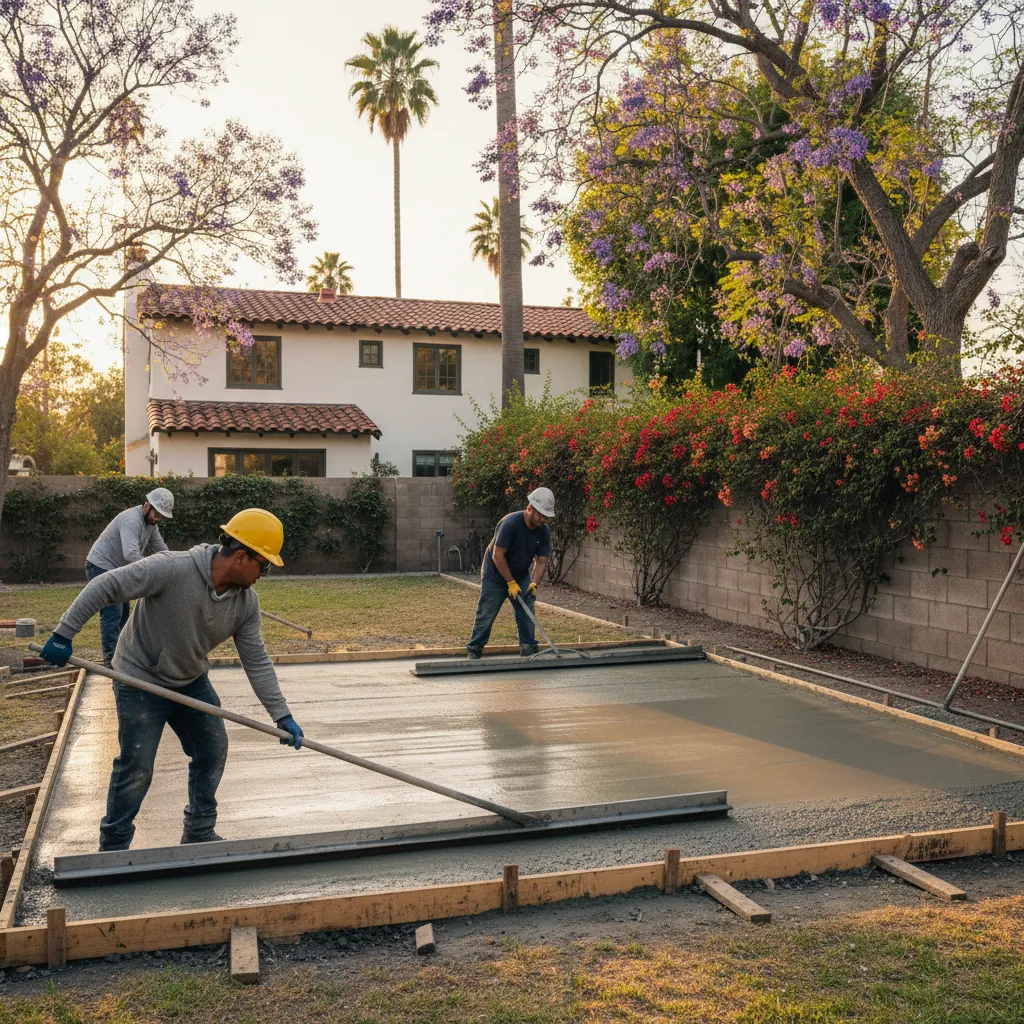
Most people don't think about dirt until their concrete cracks. But a good contractor thinks about it before mixing a single batch.
Van Nuys sits in the San Fernando Valley on soil that shifts. A lot. The ground here is a mix of clay and sandy loam, and it expands when it gets wet then shrinks when it dries out. That cycle puts constant stress on any slab sitting on top of it. Patios near Lake Balboa crack within two years when the original crew never bothered to prep the subgrade. It's the same story every time.
Here's what makes this area tricky for concrete patio installation:
- Expansive clay pockets that swell after winter rain and contract hard during summer heat
- Poor natural drainage in low spots, especially closer to the Sepulveda Basin
- Temperature swings that can hit 105 degrees in August and drop to the low 40s overnight in January
- Long dry stretches that pull moisture from the soil and create voids under slabs
So what's the fix? Proper compaction. A good contractor grades the base material in lifts, compacts each layer, and verifies density before moving on. According to the American Concrete Institute, subgrade prep is the single biggest factor in long-term slab performance. That tracks with everything the field shows.
And the heat matters just as much as the soil. Concrete cures through a chemical reaction that needs moisture. When it's 100 degrees out in Van Nuys, that moisture evaporates fast. Pour at the wrong time of day without proper curing methods and you'll get surface crazing within weeks. A good contractor schedules pours early morning during summer, uses evaporation retarders, and wet-cures for the right number of days. Not shortcuts.
The climate here also means paying close attention to control joint spacing. Thermal expansion is real. A slab that doesn't have room to move will crack wherever it wants to, not where you planned.
This isn't guesswork. It's knowing the ground you're building on. A contractor who's worked across the Valley long enough can read a job site before the forms ever come out.
Choosing the Right Concrete Finish for Your Backyard
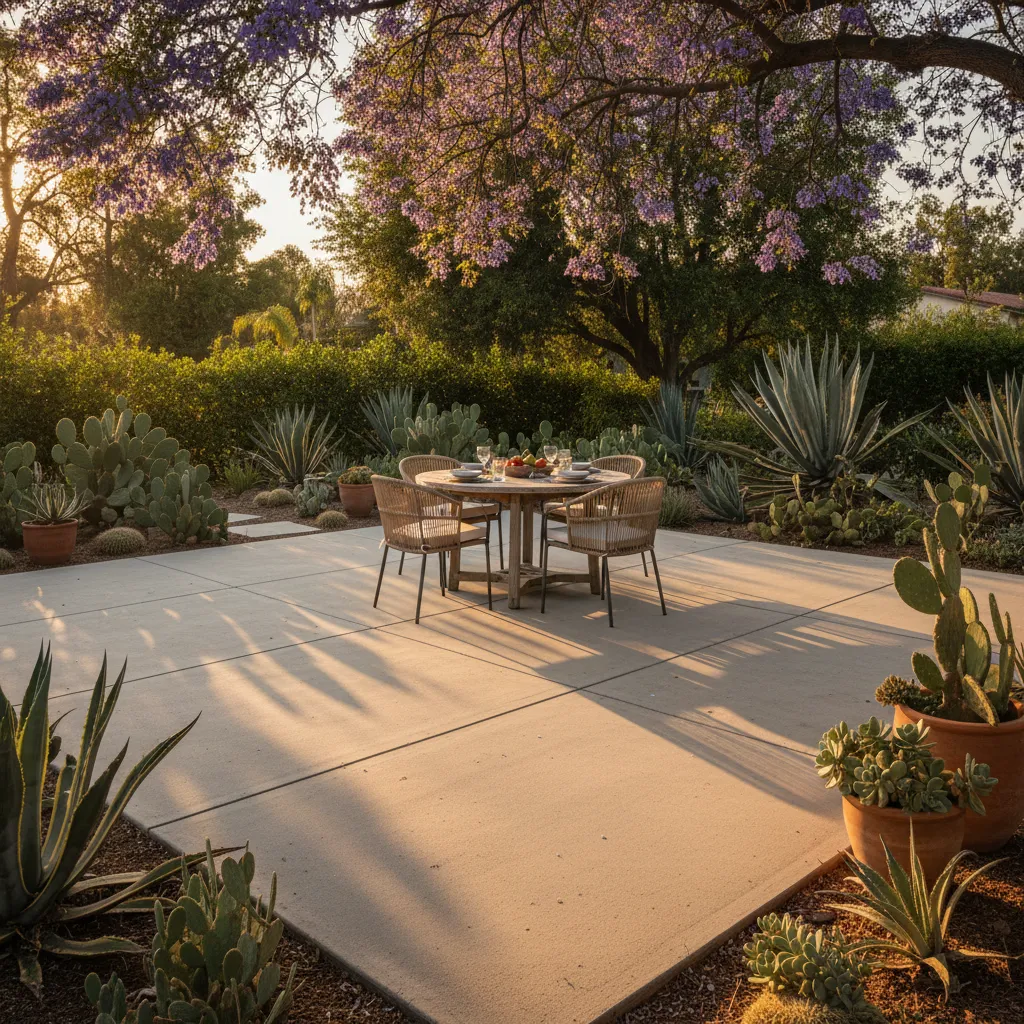
This is the part where most people freeze up. You've already decided on concrete patio installation, but now someone's asking you to pick a finish. And you're staring at samples wondering what'll actually look good in your yard six months from now.
This comes up with homeowners in Van Nuys every week.
The finish you pick changes everything about how your patio looks, feels underfoot, and holds up over time. Here's what people choose most often and why:
- Broom finish, the classic. It's got a light texture that keeps it from getting slippery when wet. Great around pools or anywhere kids run barefoot. Most backyards near Lake Balboa lean toward this one.
- Stamped concrete, gives you the look of stone, brick, or tile without the cost. It's poured as one solid slab, then stamped before it sets. Holds up better than pavers because there's no shifting.
- Exposed aggregate, small stones show through the surface. It's got a natural, earthy feel that pairs well with drought-friendly landscaping.
- Smooth trowel finish, clean and modern. Looks sharp next to an outdoor kitchen build or a BBQ island construction. But it can get slick, so it's usually saved for covered areas.
So how do you decide? Think about what you're actually doing out there. Hosting dinners? Stamped concrete photographs well and feels polished. Got dogs tearing across the yard? Broom finish handles that without showing wear. Want something that hides dirt between cleanings? Exposed aggregate is forgiving.
Color matters too. Integral color can go into the mix before the pour, or a stain can be applied after curing. Warm tans and sandstone tones are popular because they don't fight the sun. Darker shades absorb heat, something worth knowing when summer hits hard.
One thing worth doing: bring a photo of your house exterior to the consultation. The finish should feel like it belongs there, not like it was dropped in from a magazine. The right choice is obvious once you see it next to your siding and fence line.
But you don't have to figure this out alone. That's literally what the consultation is for.
What the Permit Process Looks Like for a Concrete Patio in Van Nuys
Most people don't expect paperwork when they just want a nice patio. But Van Nuys falls under the City of Los Angeles building code, and that means permits matter more than you'd think.
Here's the truth. Not every concrete patio installation needs a permit. A simple slab on grade under a certain square footage might be exempt. But once you're talking about anything attached to your home, anything near a property line, or anything over a specific thickness, you're in permit territory. A contractor deals with the LA Department of Building and Safety regularly and knows exactly where those lines are for your project.
How a Contractor Handles It
A contractor takes care of the permit legwork so you don't have to sit on hold or drive downtown. Here's what the process looks like from your side:
- The contractor assesses your property and checks setback requirements for your specific lot in Van Nuys.
- A site plan gets prepared showing the patio dimensions, drainage direction, and distance from structures.
- The application gets submitted to LADBS, either online through their express permit system or in person when needed.
- Once approved, inspections get scheduled at the right stages so nothing gets flagged later.
The whole permit process usually takes one to three weeks depending on the scope. Sometimes faster in quieter months.
More often than not, the biggest holdup isn't the permit itself. It's grading and drainage. LA is strict about where water goes after it hits your new slab, especially in neighborhoods like Lake Balboa and the areas near the Van Nuys/Sherman Oaks border where lot grading varies a lot. A good contractor factors drainage into every plan from day one so there are no surprises at inspection.
Skipping permits is a gamble no reputable contractor recommends. An unpermitted patio can cause real problems when you sell your home, it can also void your homeowner's insurance coverage if something goes wrong. According to the City of Los Angeles, unpermitted work may require costly corrections or full removal during a property transfer.
Want help figuring out whether your project needs a permit? Give us a call.
A licensed contractor has been through this process hundreds of times. You won't need to guess at anything.
The Concrete Patio Installation Process Step by Step
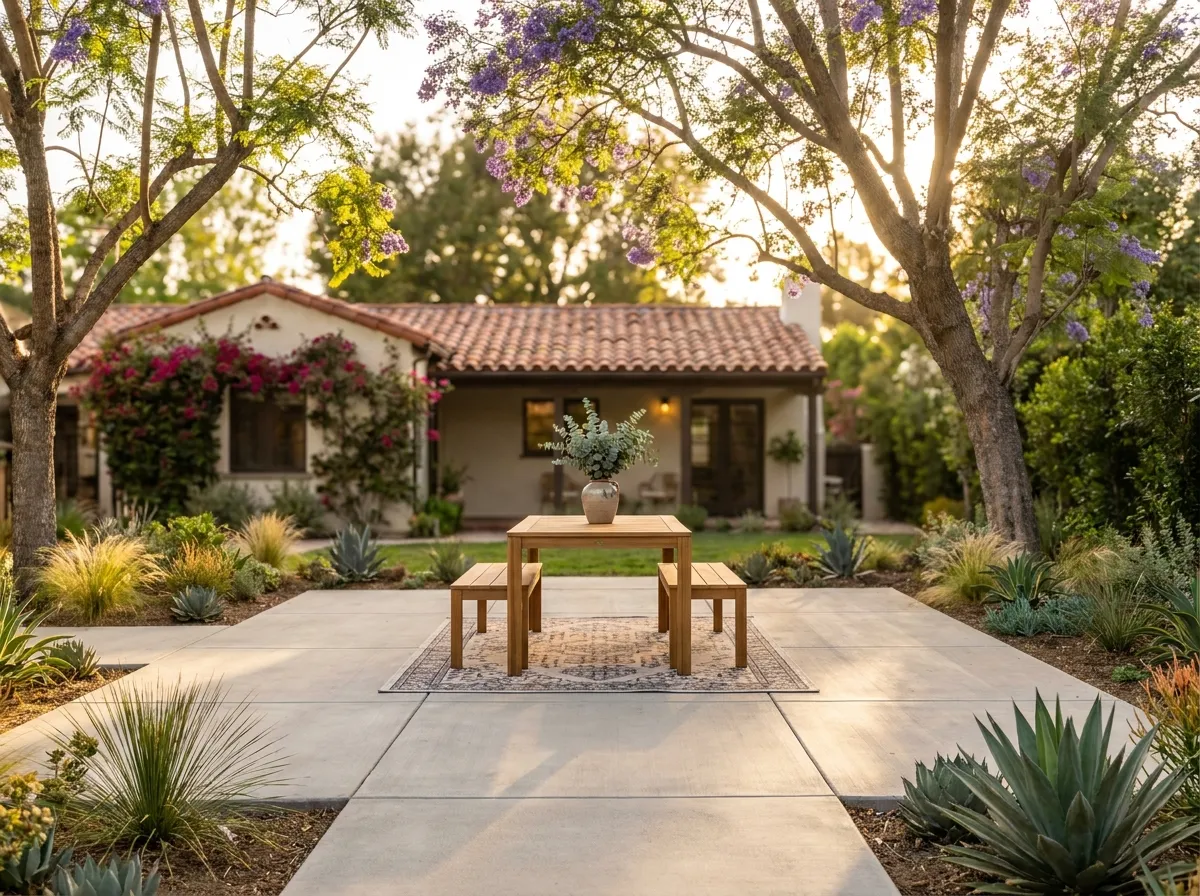
People always ask what the actual work looks like. Fair question. Here's exactly how concrete patio installation goes from start to finish.
- Layout and excavation. The patio footprint gets marked with stakes and string lines. Then the ground gets dug down about four to six inches, depending on your soil. In Van Nuys, a lot of yards near Victory Boulevard have clay-heavy dirt that needs extra attention during this step.
- Grading and base prep. The area gets graded so water flows away from your house. A compacted gravel base goes down next. This is the part most DIY attempts skip — it's also the reason those patios crack within a year.
- Forming. Lumber forms get set around the perimeter to hold the concrete in place while it cures. Every form gets leveled and braced. If your patio has curves or angles, custom forms get built on site.
- Reinforcement. Rebar or wire mesh goes inside the forms. This keeps the slab from splitting when the ground shifts. And ground does shift here. A good contractor's work follows OSHA concrete work standards for residential construction so every reinforcement and forming step meets established safety requirements.
- Pouring and finishing. The concrete gets poured, screeded level, then worked with floats and trowels. You pick the finish. Broom texture for grip. Smooth trowel for a clean look. Stamped patterns if you want something more decorative.
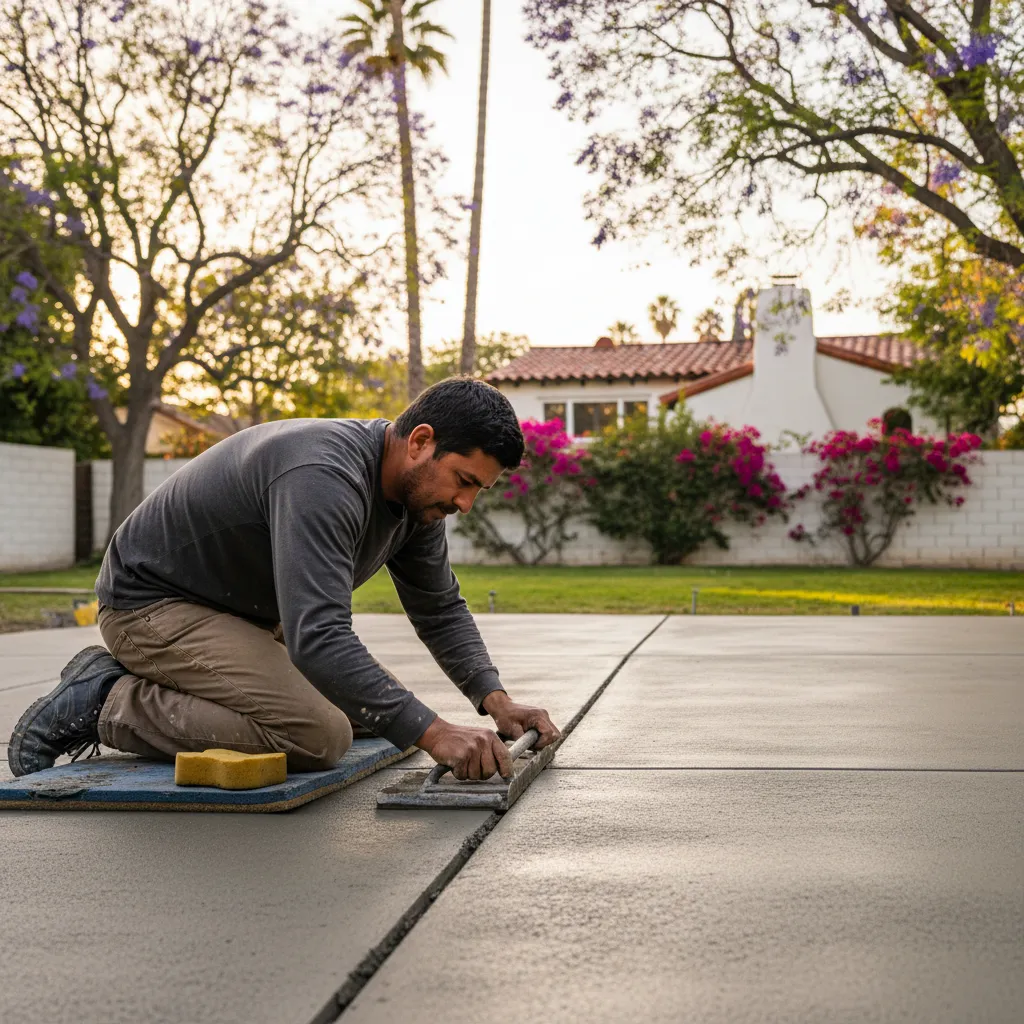
- Control joints and curing. Control joints get cut so the slab cracks where planned, not randomly across the middle. Then curing compound gets applied and it sets for at least a few days before you walk on it.
The whole process usually takes two to three days for a standard backyard patio. Bigger projects or stamped finishes can add a day.
More often than not, the biggest delay isn't the concrete. It's what's already in the yard. Old tree roots, buried sprinkler lines, a crumbling walkway that needs removal first. A contractor handles demolition too, so you don't need to coordinate another crew.
But here's what matters most. Every step builds on the one before it. Rush the base prep and the slab fails. Skip reinforcement and you'll see cracks by next summer. A good contractor has done this work across neighborhoods like Lake Balboa and Panorama City long enough to know where shortcuts cause problems, and doesn't take them.
Want to talk through your project? Give us a call.
Replacing an Old or Cracked Slab Before the New Pour
Most calls in Van Nuys aren't for empty backyards. They're for patios that already exist but look terrible. Cracked slabs, sunken corners, concrete that's been patched so many times it looks like a quilt. It shows up every single week.
Here's what you need to know. You can't just pour new concrete on top of old concrete and expect it to hold. If the existing slab has cracks wider than a quarter inch, if it's heaving or sinking, or if water pools in the middle after a light rain, that old slab has to come out first. No shortcuts.
How Removal Works
Tearing out an old patio slab is loud, dusty work, but a good crew handles it fast. The process looks like this:
- The existing concrete gets broken into manageable sections using a jackhammer or skid steer.
- All debris gets loaded and hauled off the property the same day.
- The exposed subgrade gets inspected for soft spots, root intrusion, or old plumbing lines.
- The base gets re-compacted or replaced with fresh Class II base material.
- The surface gets graded to proper slope before any new forms go up.
That subgrade inspection is the step most homeowners don't think about. But it's the whole reason the old slab comes out in the first place. Over in the Lake Balboa area near Van Nuys, a patio pulled up last spring turned out to have tree roots that had completely undermined the base. Pour over that and the new slab cracks within a year.
So how do you know if your slab needs full replacement versus a simple overlay? Ask yourself one question. Is the slab still flat and stable when you walk across it? If you feel any rocking or see gaps underneath the edges, replacement is the right call.
And here's something people don't realize. Concrete patio installation on a properly prepared base actually costs less long-term than repeated patch jobs on a failing slab. You do it once, you do it right, you don't think about it again for decades.
The demolition phase usually takes one day for a standard backyard patio. A good crew keeps the work area tight, protects your landscaping where possible, and makes sure nothing gets left behind. Ready to find out what's under your old slab? Give us a call.