When Your Existing Railing Fails California Code
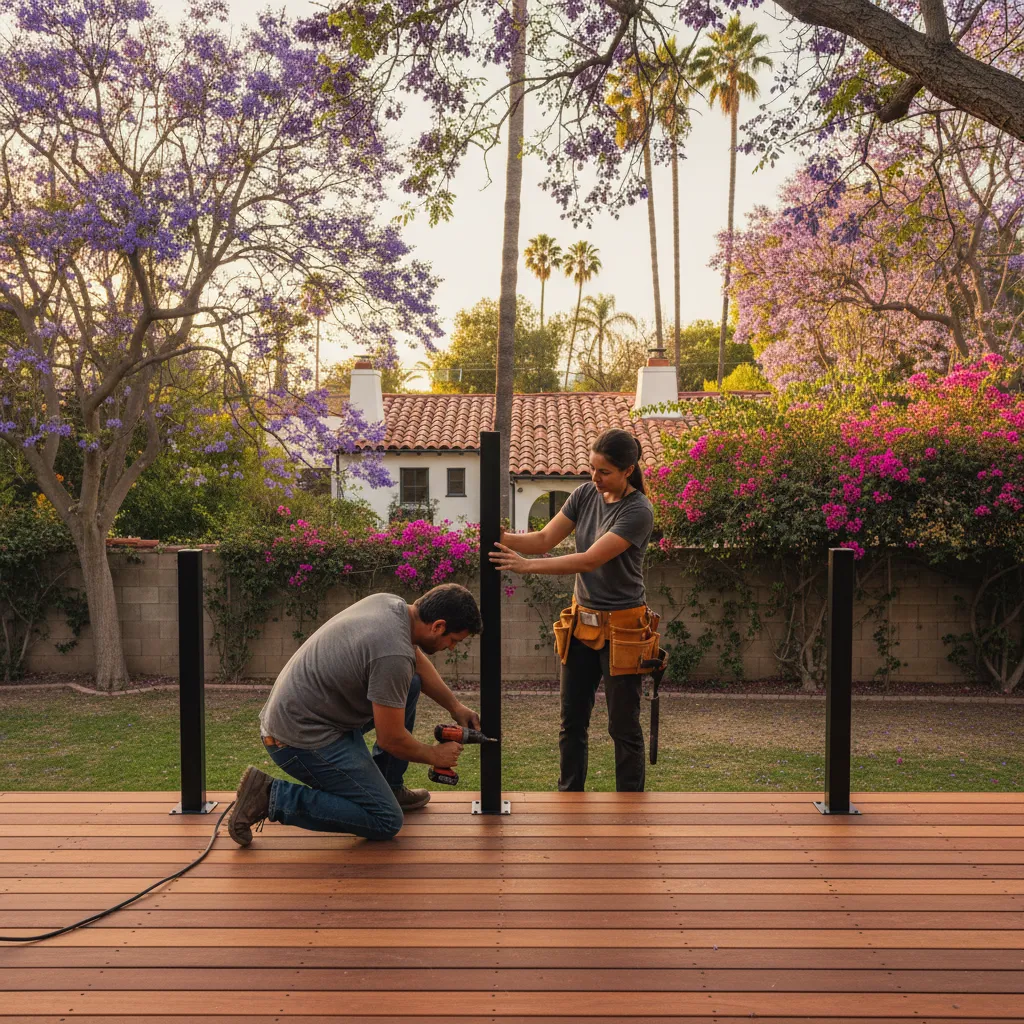
Most people don't look into deck railing installation because they woke up wanting new railings. They start because something failed an inspection. Or a contractor doing other work pointed out a problem they'd never noticed.
California's building code requires deck railings to be at least 42 inches tall on any deck that sits 30 inches or more above grade. That's the current standard. But plenty of homes in Van Nuys were built decades ago when the requirement was only 36 inches. Six inches might not sound like much. It's the difference between passing and failing.
Height isn't the only issue that comes up. Here are the most common code violations found on existing deck railings:
- Baluster spacing wider than 4 inches, large enough for a small child's head to fit through
- Posts that wobble or pull away from the deck frame when you push on them
- Horizontal cable or rail designs that create a "ladder effect" kids can climb
- Railings that can't handle 200 pounds of lateral force at the top rail, which is the load requirement
- Rotted wood posts with no visible damage on the surface but soft and crumbling at the base
That last one shows up every single week. A homeowner near Lake Balboa grabs their railing post and the whole thing shifts. The wood looks fine from the outside, the damage is hidden where the post meets the deck board.
Guardrail failures are among the leading causes of fall injuries on residential decks. That stat alone should make you take a wobbly post seriously.
And here's what catches people off guard. If you're selling your home or pulling permits for any remodel work, the city can flag your existing railing as non-compliant. That means you'll need to bring it up to current code before the project moves forward. Homeowners in Van Nuys have delayed kitchen remodels by weeks because their deck railing got flagged during a routine inspection.
Not sure if your railing meets code? That's actually pretty common. Most homeowners have no idea what the current requirements are, and there's no reason you would unless you deal with this stuff daily.
Choosing the Right Railing Material for Southern California Sun
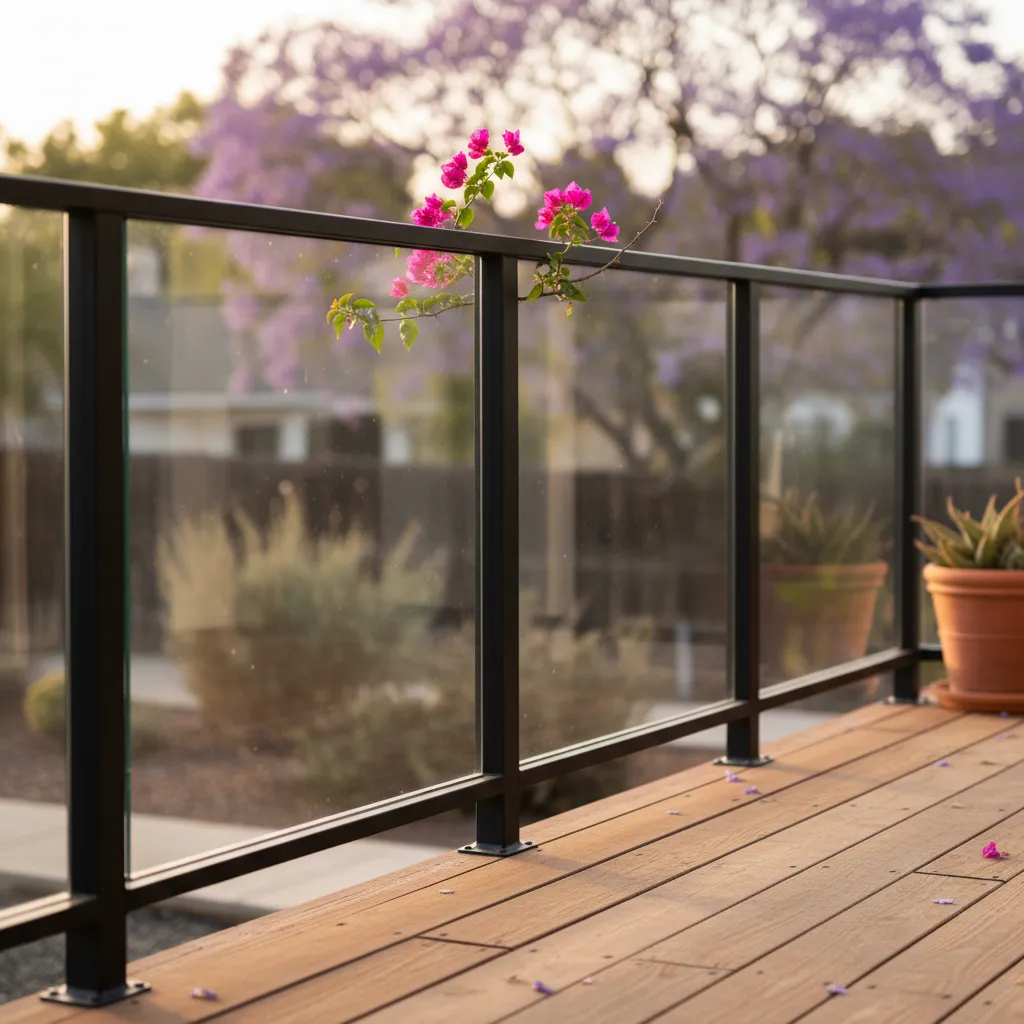
Most people pick a railing based on how it looks in a photo. That's a mistake out here.
Van Nuys gets over 280 days of sunshine a year. UV exposure breaks down certain materials fast. Railings only four years old get pulled off because the homeowner chose something that couldn't handle the heat and dry air. So before you think about style, you've got to think about what survives this climate.
Here's what performs well and what doesn't hold up:
- Aluminum handles the sun without warping, cracking, or rusting. It stays cool to the touch compared to steel. For most deck railing installation projects, aluminum is the go-to.
- Composite resists fading better than wood and won't splinter. It pairs well if you've already got a composite deck installation underneath.
- Wood looks great on day one. But without regular sealing, the Van Nuys sun dries it out and turns it gray within a couple of seasons. Cedar lasts longer than pine, but neither is maintenance-free.
- Cable and glass panel systems work well for modern homes, especially around the Lake Balboa area with a lot of updated builds. Glass needs cleaning, cable needs tensioning over time.
People frustrated with their old railing usually chose the wrong material for the climate. Not a bad product. Just a bad match.
And here's something most folks don't consider. The direction your deck faces matters. A south-facing or west-facing deck takes a beating every afternoon. A contractor walks your property and points out exactly what kind of exposure you're dealing with before recommending anything.
Not sure which direction to go? That's actually pretty common. A good contractor brings samples to the job site so you can see and feel each option in your own backyard. Color, texture, weight. It's easier to decide when you're standing on the deck instead of scrolling through a website.
The right material means your railing still looks solid five, ten years from now. The wrong one means you're replacing it way too soon.
How Deck Railing Installation Works From Start to Finish
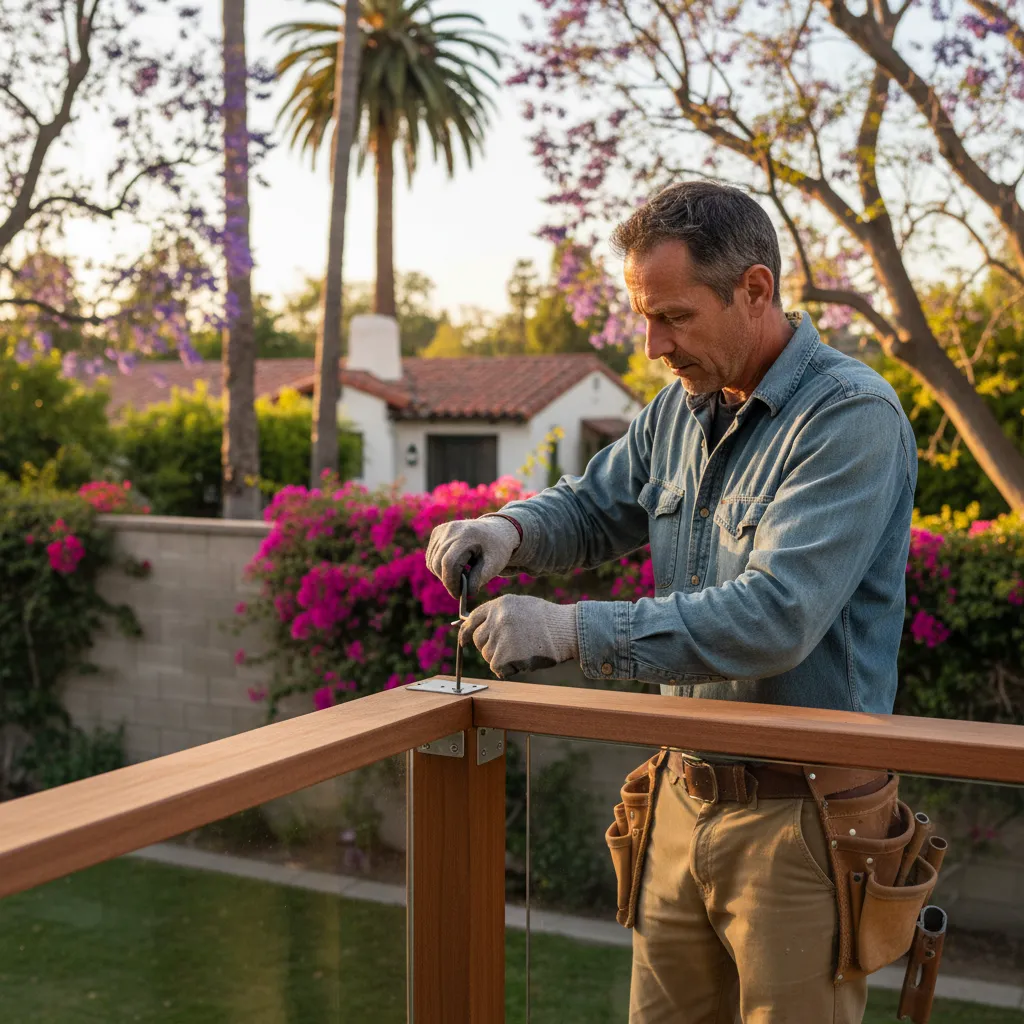
People always ask what the actual process looks like. Fair question. Here's how deck railing installation goes on every project, whether it's a small backyard deck near Lake Balboa or a second-story build off Sylvan Street in Van Nuys.
- Measure and assess the deck. The framing, the post locations, and the overall condition of your deck surface get checked. If the substructure can't hold new posts, you'll hear about it before anything gets started.
- Choose your railing style and material. Wood, aluminum, cable, glass panels. You pick what fits your home. A contractor walks you through what works best for your deck's layout and height requirements.
- Mark and drill post locations. Posts go in at specific intervals. Too far apart and the railing won't meet code. Every spot gets marked, then drilled or bolted into the framing below.
- Set the posts plumb and secure. Each post gets leveled and locked in. This is the step most DIY jobs get wrong — wobbly posts show up on decks all over the Valley.
- Install top and bottom rails. Rails connect the posts and give the whole system its strength. Each piece gets cut on site for a tight fit.
- Attach balusters or infill panels. Balusters go in with exact spacing. California building code says gaps can't exceed four inches. Every single one gets measured.
- Final check and cleanup. Every connection gets tested, every post gets shaken, and the railing gets checked to feel solid under pressure.
The whole thing usually takes one to two days for a standard deck. Bigger projects or custom designs can stretch a bit longer.
The hardest part isn't the railing itself. It's what's underneath. Old decks sometimes have rotted rim joists or weak ledger boards that can't support new post hardware. A contractor who also does wood deck construction and composite deck installation catches that stuff early. So if something needs fixing first, it gets handled right there.
And here's something people don't think about. Your gate. If you've got stairs, you probably need a gate that swings and latches properly. A good contractor builds those into the railing plan from the start so nothing looks like an afterthought.
Permit Requirements for Deck Railing in Van Nuys
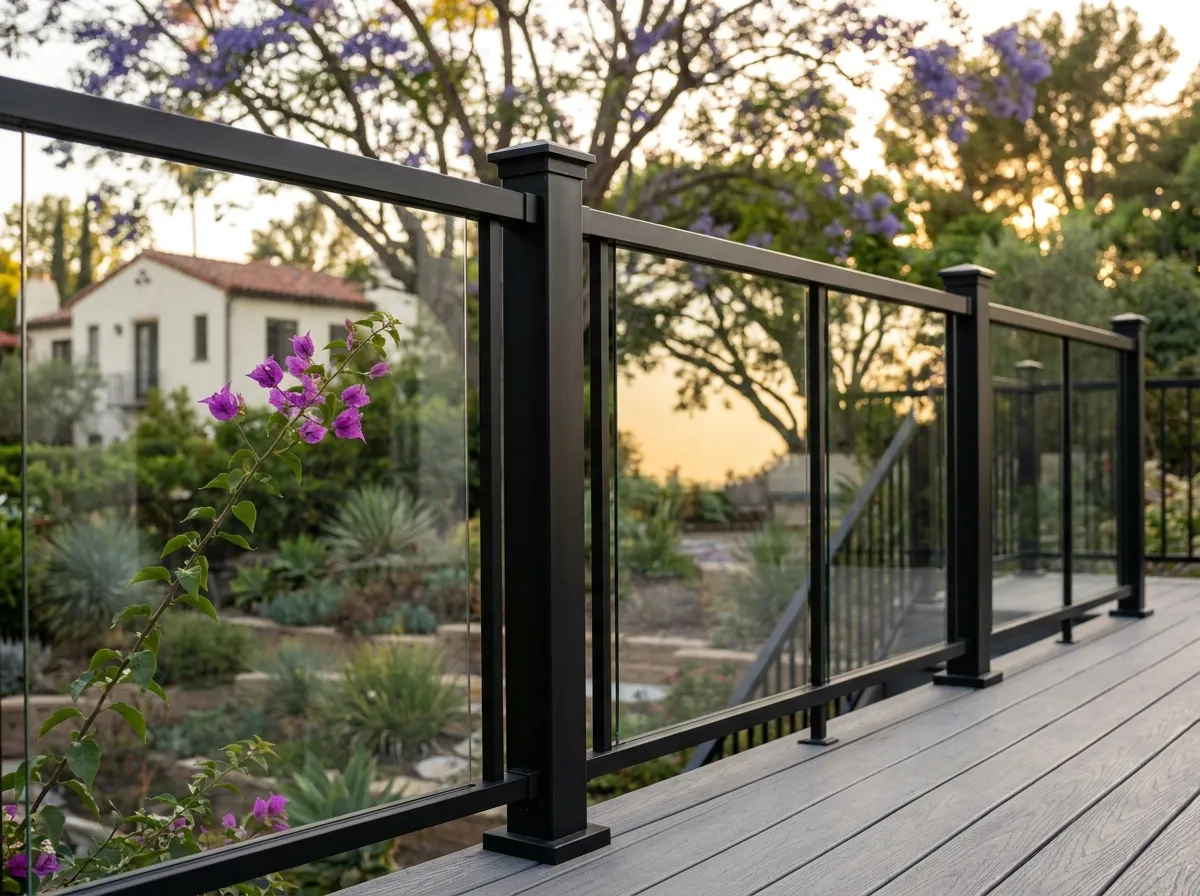
Here's what catches most homeowners off guard. The City of Los Angeles requires a building permit for deck railing installation when the deck sits 30 inches or more above grade. That covers most raised decks across Van Nuys.
Even if your deck is lower, railing height and spacing still need to meet California Building Code standards. Residential railings must be at least 36 inches tall. The gaps between balusters can't exceed 4 inches. Older homes near Lake Balboa often have original railings that don't come close to meeting current code — they were built under different rules decades ago.
What the Permit Process Looks Like
People assume permits take forever. Not always true. For a straightforward deck railing installation, the process usually goes like this:
- The contractor pulls the permit through the LA Department of Building and Safety on your behalf.
- Plans or a basic scope of work get submitted showing railing height, material, and attachment method.
- An inspector visits after installation to confirm everything meets code.
Most railing permits in Van Nuys move through the system in a couple of weeks. But if your deck itself was built without a permit, that's a different situation entirely. The city may want to inspect the whole structure before signing off on new railings.
This comes up regularly.
Homeowners often don't even know their existing deck was unpermitted. So a contractor checks that before starting any work. It saves you from a surprise stop-work order or a failed final inspection. The LA Department of Building and Safety has noted that unpermitted work can also create problems when you try to sell your home.
And here's something worth knowing. If you're adding railings as part of a bigger project like a wood deck construction or composite deck installation, everything gets bundled under one permit. That means one inspection timeline instead of two. It keeps your project moving and keeps costs predictable.
Not sure if your project needs a permit? Give us a call — we'll connect you with a contractor who'll look at what you've got and tell you straight.
Post-Installation Inspection and Long-Term Railing Care
A good crew doesn't leave until you're happy with every single detail.
The inspection starts the moment the last fastener goes in. Every post gets checked for rock-solid stability. The top rail gets checked for rough spots or gaps. The spacing between balusters gets tested with a 4-inch sphere, because that's the standard Van Nuys building code inspectors use. If a sphere can pass through, a small child's head could too, so a good crew gets that right every time.
What Gets Checked Before the Crew Leaves
- Post anchoring at the base and top connections for zero movement
- Baluster spacing across every section of the railing run
- Rail height measured at multiple points to confirm it meets the 36-inch minimum for residential decks
- Hardware tightness on all visible and hidden brackets
- Overall alignment from multiple viewing angles
When something's off by even a fraction, it gets fixed right there. Railing failures are among the most common causes of deck-related injuries. That's why a good crew takes this step seriously.
Now for keeping your railing looking great for years.
Wood railings in Van Nuys need a fresh coat of sealant or stain roughly every two to three years. The San Fernando Valley sun is brutal, especially in neighborhoods like Lake Balboa where homes get full southern exposure. UV damage fades wood fast, it also dries out the grain and invites cracking. Composite and aluminum railings need far less work. A simple wash with mild soap a couple times a year handles most buildup.
Here are signs it's time to call a contractor back:
- Posts that wobble or feel loose when you push on them
- Visible rust on metal fasteners or brackets
- Wood that feels soft or spongy to the touch
- Balusters that have shifted or pulled free
Catching small problems early saves you from a full railing replacement down the road. Every homeowner should hear the same thing. Give your railing a firm shake once a season. If anything moves, don't wait on it. And don't ignore discoloration on wood posts near the deck surface. That's usually moisture damage creeping in from below.
Your deck railing installation is an investment in your home's safety. A little attention goes a long way toward protecting it.