Why Older Tract Homes Need a Sizing Check First
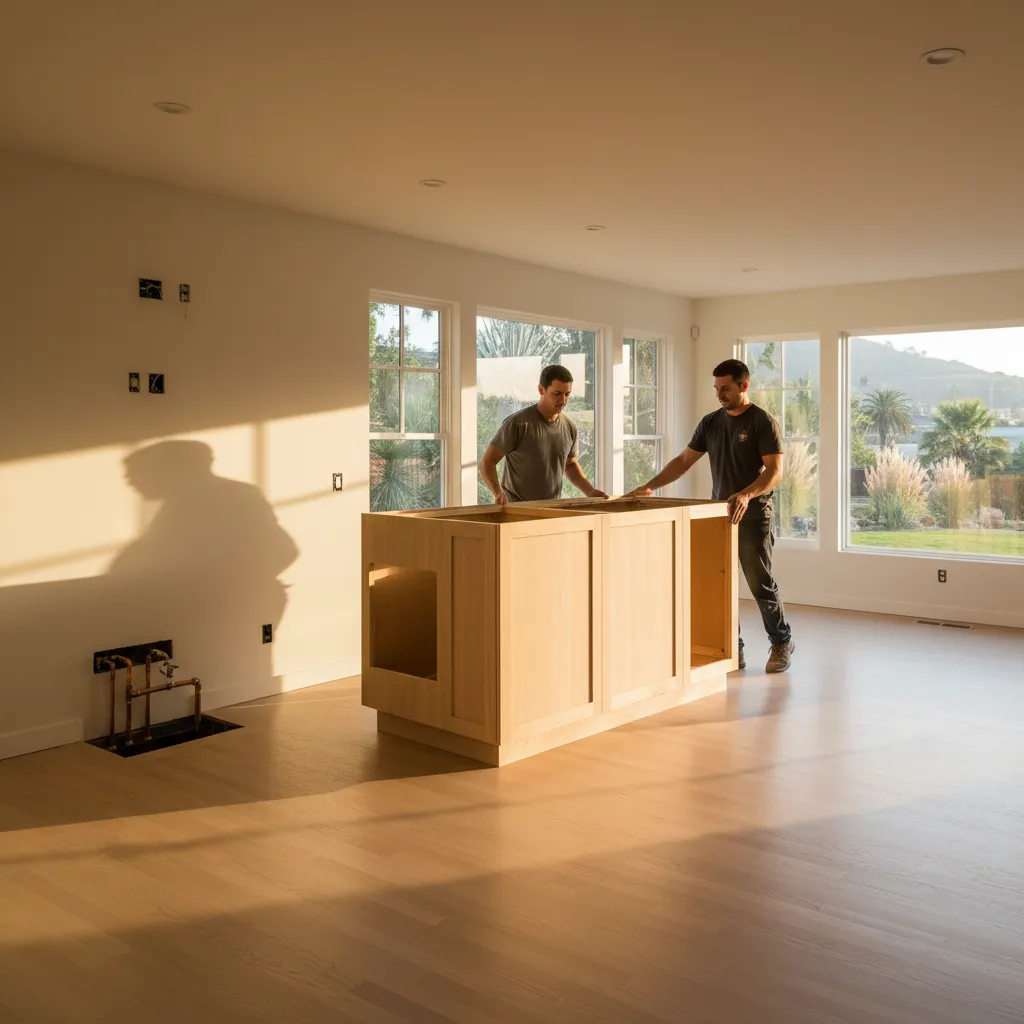
Most homes in Van Nuys were built between the 1940s and 1970s. That matters more than you'd think.
Those older tract homes have kitchens that were designed for a different era. Smaller footprints. Narrower walkways. Electrical panels that top out at 100 amps. A good contractor walks into these kitchens and measures everything before talking about island shapes or countertop materials. A kitchen island installation that works perfectly in a newer open-concept home can be a total disaster in a postwar ranch if you skip the sizing check.
Here's what a contractor looks at during that first visit:
- Clearance around all sides of the proposed island. You need at least 36 inches on every walkway, 42 if appliance doors swing open into the path.
- Location of existing plumbing lines, especially if you want a sink in the island.
- Electrical capacity for outlets, under-counter lighting, or built-in appliances.
- Floor structure and subfloor condition underneath the planned footprint.
A lot of homes near Sepulveda Boulevard have galley-style kitchens that feel tight even without an island. But tight doesn't always mean impossible. Sometimes a short wall comes out or the layout gets reconfigured just enough to make an island fit without a full kitchen remodel. Other times, a smaller island with smarter storage built in is the better call, so you still get the prep space and seating you want.
And here's something people don't expect. The floor in a 1950s home isn't always level. Not even close. Half-inch drops across six feet of kitchen floor aren't unusual. Set an island on that without correcting it first and your countertop looks crooked and your drawers won't close right. So a contractor checks the floor with a laser level before anything gets built.
More often than not, the sizing check changes the original plan. That's not a bad thing. It means you end up with an island that actually fits your kitchen instead of one that looked great on Pinterest but blocks your dishwasher door. Better to spend an extra hour measuring than tear something out later because it doesn't work in a Van Nuys home the way it looked in a magazine.
Freestanding vs. Built-In Islands: Choosing the Right Fit

This is the first real decision you'll face. And it changes everything about how your kitchen island installation goes.
A freestanding island is basically a standalone piece of furniture. It sits on the floor, it's not anchored to anything, and you can move it if you ever want to rearrange. Sounds flexible, right? It is. But there are trade-offs. You can't run plumbing to it easily. Electrical is trickier. And it won't feel as solid as something that's truly part of your kitchen.
A built-in island is permanent. It's secured to the floor, tied into your home's structure, and can handle a sink, dishwasher, or cooktop without any issues. Most kitchen island installation projects across Van Nuys end up being built-in. People want that locked-in, finished look. They want quartz countertop installation on top, maybe custom cabinet installation underneath. That only works right with a built-in approach.
Here's how the decision usually gets made. A contractor looks at a few things during the walkthrough:
- Your kitchen's square footage and the clearance around the island footprint
- Whether you want plumbing, gas, or electrical in the island
- Your flooring type and what's underneath it
- How long you plan to stay in the home
Older homes near Lake Balboa sometimes have quirky floor plans that make a freestanding option the smarter call. It comes up maybe once out of every ten jobs. More often than not, homeowners go built-in once they understand the difference in stability and resale value.
One thing people don't think about: a freestanding island can shift over time on tile or hardwood. That slow creep drives people crazy, and they end up calling to have it anchored anyway. So if you're leaning freestanding just to save a step, it's worth thinking twice.
Not sure which direction makes sense for your kitchen? That's actually pretty common. Give us a call and we'll match you with a contractor to walk through it.
Permits and Utility Connections in Los Angeles

Skip the permit and you'll regret it. Van Nuys homeowners who try to add a kitchen island with plumbing or electrical and just wing it usually pay for it later. They go to sell the house, the inspector flags unpermitted work, and suddenly they're tearing out a brand-new island.
Los Angeles requires a building permit for any kitchen island installation that involves electrical wiring, gas lines, or plumbing. A simple butcher-block island with no connections? You're probably fine. But the moment you want a sink in that island, or a cooktop, or even a couple of outlets, you need to pull permits through the LA Department of Building and Safety.
What the Permit Process Looks Like
Here's how a contractor handles it in Van Nuys, start to finish:
- The contractor draws up plans showing the island's footprint, electrical layout, and any plumbing or gas runs.
- Plans get submitted to LADBS, usually through their online express permit system for straightforward jobs.
- A plan checker reviews the scope. Most kitchen island permits get approved within a couple of weeks.
- Inspections get scheduled at each stage: rough plumbing, rough electrical, and final.
- The inspector signs off and you've got a fully permitted upgrade on record.
More often than not, the permit itself isn't the holdup. It's the utility connections underneath your slab. Lots of homes near Lake Balboa and throughout the west Valley sit on concrete foundations with no basement. Running a new drain line for an island sink means cutting into that slab, trenching a pipe to your existing drain stack, and patching everything back up. It's real work, but it's routine for the right crew.
Electrical is usually simpler. A dedicated 20-amp circuit runs from your panel to the island location, which is code for kitchen counter receptacles according to the National Electrical Code. Gas lines for a cooktop need their own shutoff valve and a pressure test before the inspector will approve.
And here's the thing people don't think about. Your existing panel might be full. Older Van Nuys homes sometimes have 100-amp panels with no open breaker slots. That means a small panel upgrade before the island can even be wired. A contractor checks all of this during the initial walkthrough so there aren't surprises mid-project.
Permits protect you, plain and simple. They make sure the work is safe and they add real value when it's time to sell.
What the Installation Process Looks Like Step by Step

People always ask how long this takes and what to expect. Fair question. Here's exactly how a kitchen island installation goes from start to finish.
- Site prep and protection. The crew covers your floors, counters, and appliances before anything else. Dust happens, but it doesn't need to ruin your kitchen.
- Mark the layout. The island footprint gets taped out on your floor so you can see exactly where it'll sit. This is where you catch spacing problems before they become real problems.
- Run rough plumbing and electrical. If your island includes a sink or outlets, the lines go in now. The crew opens the floor, routes everything to code, then patches it clean.
- Set the base cabinets. Each cabinet gets leveled and secured to the subfloor. Older homes in Van Nuys sometimes have uneven floors, so shimming is almost always part of the job.
- Install the countertop. Once the base is locked in, the countertop goes on — quartz, butcher block, granite, whatever you picked during planning.
- Final connections and trim. Plumbing gets tied in, outlets get wired hot, and any trim pieces or panels finish the look.
- Walkthrough with you. The crew doesn't leave until you've opened every drawer, tested every outlet, and run water through the sink if there is one.
Most kitchen island installations in the Lake Balboa area and across the Valley take three to five days. Simpler islands with no plumbing can wrap in two. But if there's a gas line for a cooktop, add a day or two.
More often than not, the thing that slows a job down isn't the install itself. It's a countertop that arrives late or a permit inspection that gets rescheduled. A good contractor stays on top of both so you're not left with a torn-up kitchen for a week.
And here's something most folks don't think about. A careful crew tests the cabinet doors and drawers after the countertop is set, not before. The weight of the slab can shift things just enough to throw off alignment. Small detail, big difference in how everything feels when you use it daily.
How to Know Your New Island Is Installed Correctly
You shouldn't have to wonder. A good kitchen island installation speaks for itself the moment you walk into the room.
But this question comes up a lot from Van Nuys homeowners, and it's a fair one. You just invested real money into your kitchen. You want to know it's right. Here's what to check once the dust settles and the tools are packed up.
The Physical Tests
Lean on it. Push against the corners. Try to rock it side to side. A properly anchored island won't budge, not even a little. A properly installed island is bolted to the subfloor through the base framing, so there's zero play. If you feel any wobble at all, something's off.
Next, grab a level. Run it across the countertop in both directions. Your surface should be dead flat. Even a slight slope means water pools near the sink or things roll off the edge. Some crews shim islands with cardboard and call it done. That's not how a quality job gets done.
The Details That Matter
Once you've confirmed it's solid and level, look closer. Here's what separates a quality job from a rushed one:
- Cabinet doors and drawers open and close smoothly without catching or dragging
- No visible gaps between the island base and the finished floor
- Plumbing connections under the sink are dry, no drips after 24 hours of use
- Electrical outlets work and sit flush against the panel
- Countertop seams are tight and even, especially on quartz or stone
More often than not, problems show up in the first week. That's why a good contractor does a walkthrough with every homeowner before leaving the job site. Every drawer gets opened. The water gets run. Things get plugged in.
And here's something people in the Lake Balboa area of Van Nuys appreciate. A good contractor comes back. If a drawer pull loosens after a month of daily use or a toe kick shifts slightly, one call and they're there. That's just part of the job for a licensed crew.
Your island should feel like it grew out of the floor. Solid, quiet, permanent. If it does, the installation was done right.