What a Licensed Remodeler Actually Does on a Project
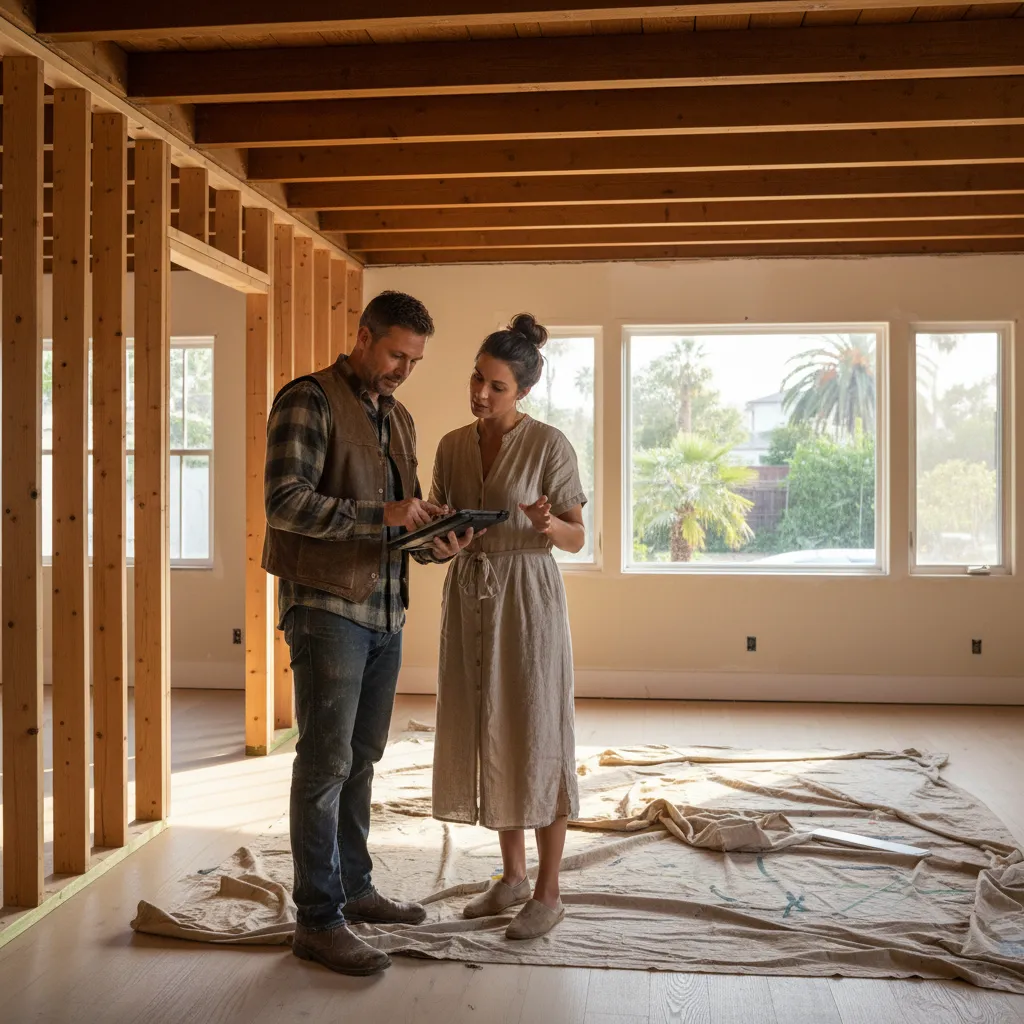
Most people think a remodeler just swings a hammer. That's maybe five percent of what a remodeler does.
A licensed remodeler manages every single piece of your project from the first sketch to the final walkthrough — pulling permits at the Van Nuys building department, coordinating inspectors, scheduling subcontractors, and making sure your walls are actually where they're supposed to be. Homeowners who try to piece together their own crew almost always spend more in the end, and it almost always takes longer than they expected.
Before Any Work Starts
The real work begins weeks before demo day. Here's what a remodeler handles before anyone picks up a tool:
- Walk your property and assess the existing structure for surprises like outdated wiring or foundation cracks
- Create a scope of work that spells out exactly what gets built, removed, or changed
- Pull the correct city permits and schedule required inspections
- Line up licensed electricians, plumbers, and other trades in the right order
- Set a realistic timeline based on material lead times and inspection windows
Skip any of those steps and you're asking for trouble. In homes near Panorama City, unpermitted work from a previous owner has created months of extra headaches.
During Construction
Once work is on site, the remodeler is the quarterback. Whether it's a full kitchen remodel or a whole-home remodeling project, somebody has to make fifty small decisions a day. Which wall opens first. When the drywall installation crew comes in. How to route new plumbing around an old foundation.
Something unexpected shows up behind a wall. Termite damage. Old galvanized pipes. A header that's undersized. A good remodeler already built contingency into the schedule for exactly this.
And here's something people don't realize. A licensed remodeler is also protecting you legally. Their contractor's license, insurance, and bond exist so that if anything goes wrong, you're covered. An unlicensed handyman can't offer that. According to the Contractors State License Board, unlicensed work is one of the top consumer complaints in California.
So when you hire a remodeler in Van Nuys, you're not just hiring labor. You're hiring someone who owns the outcome.
Older Homes in Van Nuys Hide Surprises, Here's How to Plan for Them

Walls opened up in homes near Sylmar Avenue that hadn't been touched since the 1950s turn up knob-and-tube wiring, cast iron drain lines rusted paper-thin, and framing that didn't meet any code written in the last forty years. That's not unusual. It's the norm for a remodeler working in Van Nuys.
Most homes here were built between the 1940s and 1970s. They look fine on the surface. But the bones tell a different story.
Here's what turns up most often once demo starts on older properties:
- Galvanized steel plumbing that's corroded from the inside out
- Undersized electrical panels that can't support a modern kitchen remodel
- Asbestos in popcorn ceilings, floor tiles, or pipe insulation
- Foundation cracks from decades of soil shifting
- Unpermitted additions from previous owners that don't meet structural code
At least one of these shows up. So how do you plan for it? You build a contingency into your project from day one. Every homeowner should expect the unexpected — not to be dramatic, but because of what happens when people don't.
Smart Planning Starts Before Demo Day
Before a single hammer swings, a contractor walks the property and looks for red flags. Stains on ceilings. Soft spots in flooring. Doors that won't close right. These small clues point to bigger issues hiding behind drywall. And when they're spotted early, the scope can be adjusted before costs spiral.
Homes built before 1978 also carry lead paint risk. Any remodeler disturbing painted surfaces in a pre-1978 home must follow EPA lead-safe renovation requirements to protect your family during construction. A responsible contractor follows those protocols on every applicable project in Van Nuys.
According to the National Association of Home Builders, remodeling projects on homes over 50 years old are more likely to uncover code violations that require correction. That tracks with what shows up in the Lake Balboa and Van Nuys neighborhoods weekly.
Want to know what's hiding in your walls before you commit? Give us a call and we'll match you with a contractor to walk through it.
The goal isn't to scare you away from your project. It's to make sure your whole-home remodeling or kitchen remodel doesn't stall three weeks in because nobody checked what was behind the tile. A full-service contractor handles foundation repair, structural framing, drywall installation, and everything that comes after. So when surprises pop up, there's no stopping to wait for another contractor.
The LADBS Permit Process Explained for City of Los Angeles Homeowners

Permits scare people. But skipping them is way worse than dealing with the paperwork.
Every remodeling project in Van Nuys falls under the Los Angeles Department of Building and Safety. LADBS handles all residential permits for the City of Los Angeles. That includes kitchen remodels, bathroom remodels, home additions, ADU construction, and structural work like framing or foundation repair. If you're changing the footprint of your home or touching anything structural, you need a permit. Period.
Here's how the process actually works when a contractor handles it for you:
- The contractor walks your property and documents existing conditions. Photos, measurements, notes on what's there now.
- Plans get drafted to meet current LA building code. This includes structural engineering if needed.
- Plans get submitted to LADBS through their online portal or in person at the Van Nuys civic center on Van Nuys Boulevard.
- Plan check happens. LADBS reviews everything. Sometimes they ask for corrections, sometimes it sails through.
- Once approved, the permit gets pulled and posted on site before any work starts.
- Inspections happen at key stages. Foundation, framing, electrical, plumbing, final.
Delays come from incomplete plans or missing engineering calcs. A good contractor knows exactly what LADBS plan checkers look for, so submittals rarely bounce back.
Not sure if your project even needs a permit? That's actually pretty common. Simple cosmetic updates like painting or swapping cabinet hardware don't require one. But a full kitchen remodel with new plumbing lines? A garage conversion to living space? A walk-in shower conversion that moves drain lines? All permitted work.
According to LADBS, unpermitted work can result in fines and mandatory demolition of completed improvements. Homeowners near Lake Balboa have lost thousands because a previous contractor cut corners on permits. It's not worth the risk.
And here's something most folks don't realize. Permitted work actually increases your home's appraised value. Unpermitted square footage often gets discounted or ignored entirely during a sale. So the permit process protects your investment long after the project wraps up.
A contractor handles every step of the permit process, so you don't have to stand in line or decode plan check comments yourself.
What the Remodeling Process Looks Like From First Call to Final Walkthrough

You reach out. A contractor shows up. That's step one, and it's simpler than most people expect.
The process itself makes people nervous. Not the construction. The unknowns. So here's exactly how it goes.
- Phone consultation and scheduling. A contractor asks about your project, your timeline, and what's bugging you about your current space. Takes about ten minutes. Then a date gets set to come see it in person.
- On-site walkthrough and measurements. A contractor looks at the bones of your home. Framing, foundation, plumbing lines, electrical panel capacity. Photos and measurements get taken so the design phase starts with real numbers.
- Design and permit planning. The contractor puts together a scope of work based on what you want and what the structure can handle. If your project needs city permits, they handle that paperwork before any demo starts.
- Material selections. You pick finishes, fixtures, and layouts. A contractor guides you through choices that fit your goals, whether that's quartz countertop installation for a kitchen or a walk-in shower conversion in the bathroom.
- Construction begins. The crew protects the areas of your home that aren't being touched. Then work starts, beginning with demolition or structural framing depending on the scope.
- Final walkthrough. You walk every inch of the finished project. A good contractor doesn't consider it done until you do.
Homeowners near Lake Balboa or along Sherman Way say the same thing. "That was way less stressful than I thought." And that's the whole point.
Most remodeling projects in this area take between four and twelve weeks depending on size. A full bathroom remodel runs shorter than a whole-home remodeling job, obviously. But the steps don't change. A good contractor follows the same sequence every time because skipping steps is how mistakes happen.
One thing a good contractor won't do is start swinging hammers before the plan is locked in. Rushed projects create messes nobody wants to fix.
Want to get the process started? Give us a call and we'll match you with a contractor to set up that first visit.
How to Vet a Remodeler and Avoid Common Contractor Scams
The horror stories are common. A homeowner in Van Nuys pays a big deposit, the crew shows up for two days, then vanishes. No calls returned. No work finished. It happens more than you'd think.
Protecting yourself starts before you sign anything. Here's what to check before you hand over a dollar:
- Verify the contractor's license. Go to the California Contractors State License Board website. Type in the name or license number. If nothing comes up, walk away.
- Ask for proof of insurance. General liability and workers' comp. Not a photocopy from three years ago. A current certificate.
- Check reviews on more than one site. Google is a start. But look at Yelp too. Look for patterns in complaints, not just star counts.
- Request at least three local references. Call them. Ask if the project stayed on schedule. Ask if the remodeler communicated clearly when problems came up.
- Get a written contract with a clear scope. Every detail matters. Materials, timeline, payment schedule. If it's not written down, it doesn't exist.
Now here are the red flags every homeowner near Lake Balboa and across the Valley should watch for:
- They want full payment upfront. A reasonable deposit is normal, but all cash before work starts is a warning sign.
- They pressure you to skip permits. That's not saving you money. That's creating a legal problem you'll own later.
- No physical address or office. Just a cell phone and a pickup truck.
- The bid is dramatically lower than everyone else's. That gap has to come from somewhere, usually corners they plan to cut.
The cheapest quote costs the most in the end.
And don't be shy about asking a remodeler how long they've worked in your area. According to the National Association of Home Builders, contractor experience in local building codes directly affects permit approval rates and project timelines. Someone who knows Van Nuys building department processes won't leave you waiting months for sign-offs.
A contractor who's been pulling permits and working with city inspectors here for years saves you real time and real headaches on every project, from a full kitchen remodel to a detached ADU construction. Trust your gut. If something feels off during the estimate, it'll only get worse once the walls are open.