What Van Nuys Homeowners Should Know Before Building a Wood Deck
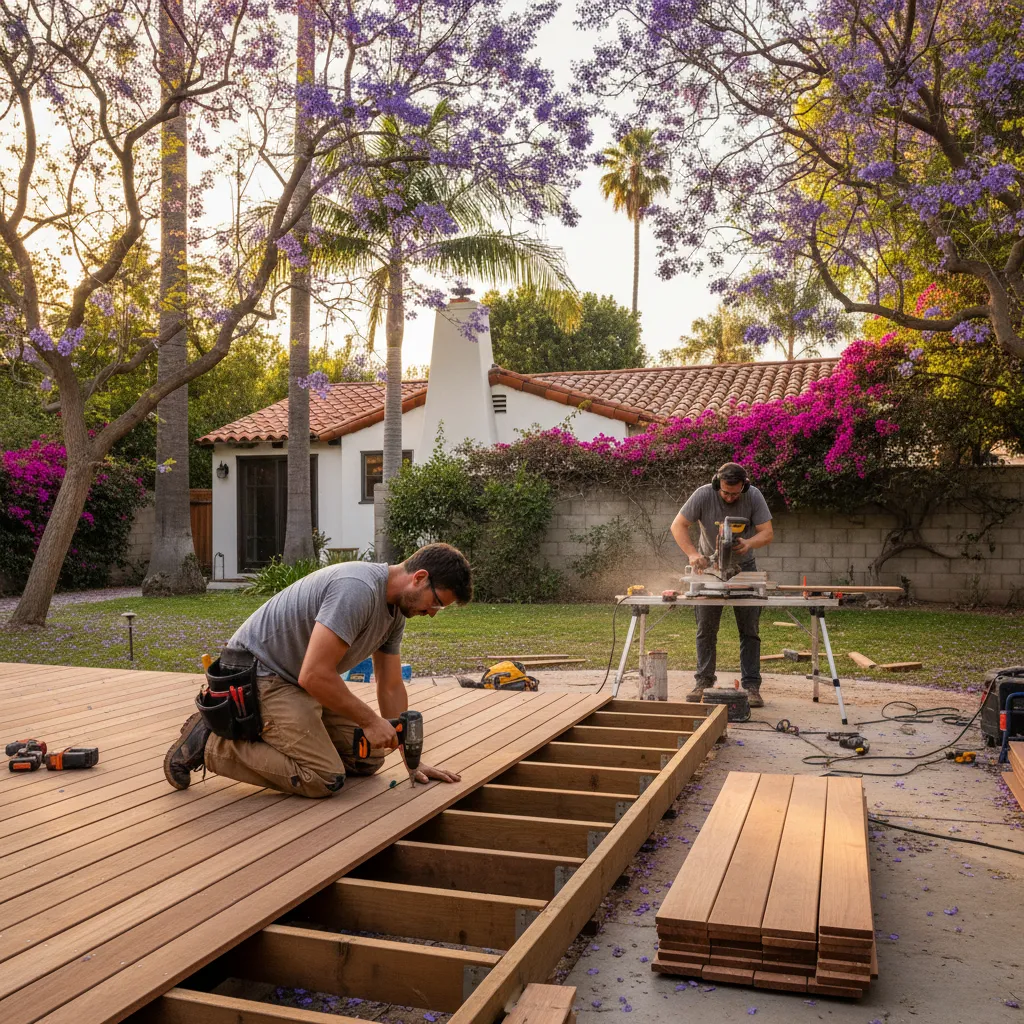
Most people start with a picture in their head. They've seen a neighbor's deck over near Lake Balboa or scrolled through photos online. That's a great start. But there's a gap between the picture and what your actual backyard needs, and that's where wood deck construction gets real.
Your property says a lot before anyone even pulls out a tape measure.
Van Nuys soil shifts. It's clay-heavy in many spots, which means the footings under your deck need to be deeper than you'd think. Decks built on shallow piers start to lean within two years. The fix costs more than doing it right the first time. So a good contractor checks soil conditions early and plans the foundation around what's actually underneath your yard.
Here's what a contractor looks at during that first visit:
- Slope and drainage patterns across your lot
- Distance from your home's foundation and any setback requirements
- Existing utilities, irrigation lines, or gas pipes in the build area
- Sun exposure through the day, which affects wood selection
Permits matter here too. The City of Los Angeles requires building permits for most deck projects, and Van Nuys falls under the LA Department of Building and Safety. A contractor handles that paperwork. Skipping permits isn't just risky. It can kill a future home sale.
And then there's the wood itself. Redwood and pressure-treated lumber both work well in our dry climate, but they age differently. Redwood looks beautiful from day one, holds up naturally against insects. Pressure-treated pine costs less upfront but needs sealing every year or two. Homeowners who skip that annual seal end up needing repairs within five years.
One more thing people overlook. Your deck height changes everything. A deck more than 30 inches off the ground triggers railing requirements and stricter structural rules. Properties along Victory Boulevard with sloped backyards hit that threshold fast. A good contractor factors all of this in before ever cutting a board.
Choosing the Right Wood for Southern California's Climate
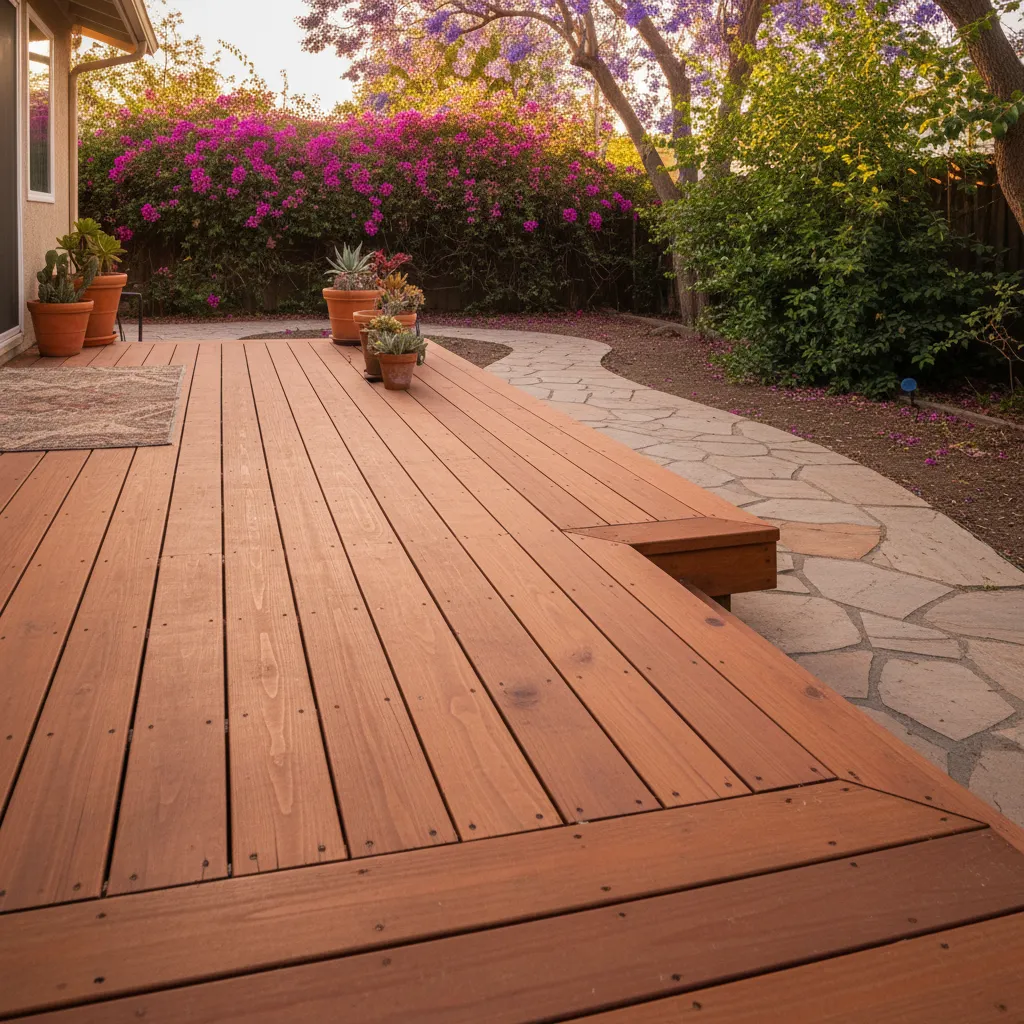
Most people pick their deck wood based on how it looks. That's a mistake out here.
Van Nuys gets hot. Really hot. Weeks of 100-degree days in summer, then months with almost no rain. That cycle of intense heat and dry air does things to wood that homeowners in other parts of the country never deal with. Decks barely three years old show up with boards already cracking, cupping, or pulling away from the joists. Usually it's the wrong wood for this climate.
So what actually holds up? Here's what works for wood deck construction projects in this area:
- Redwood is a natural fit. It resists insects, handles heat well, and doesn't warp as fast as softer species. It's been used across the San Fernando Valley for decades for good reason.
- Western red cedar offers similar benefits. It's lighter, naturally rot-resistant, and stays cooler underfoot than darker woods.
- Pressure-treated Douglas fir works for framing and substructure. For decking boards, it can serve budget-conscious projects but needs more upkeep.
- Tropical hardwoods like ipe are incredibly dense and durable. They handle UV exposure better than almost anything else.
What to steer clear of is standard pine or untreated spruce. Those species absorb moisture unevenly, and when Van Nuys heats up they dry out fast. That rapid expansion and contraction splits boards in a single season.
Grain Pattern Matters Too
Not all cuts of the same species perform equally. Vertical grain boards resist cupping better than flat-sawn ones. This is worth talking through because it affects how your deck ages over five, ten, fifteen years. A deck built near Lake Balboa Park gets different sun exposure than one tucked behind a two-story home in Van Nuys. Orientation matters, shade matters, and the wood species has to match the specific conditions of your yard.
And here's something people forget. The framing lumber underneath is just as important as the boards you walk on. Reviewing the wood decking standards and specifications makes clear that ground-contact rated lumber should be used for any structural member within six inches of soil. A good contractor follows that standard on every build.
Pick the right wood now, you won't be replacing boards in three years.
How a Licensed Contractor Builds a Wood Deck From Footings to Final Inspection
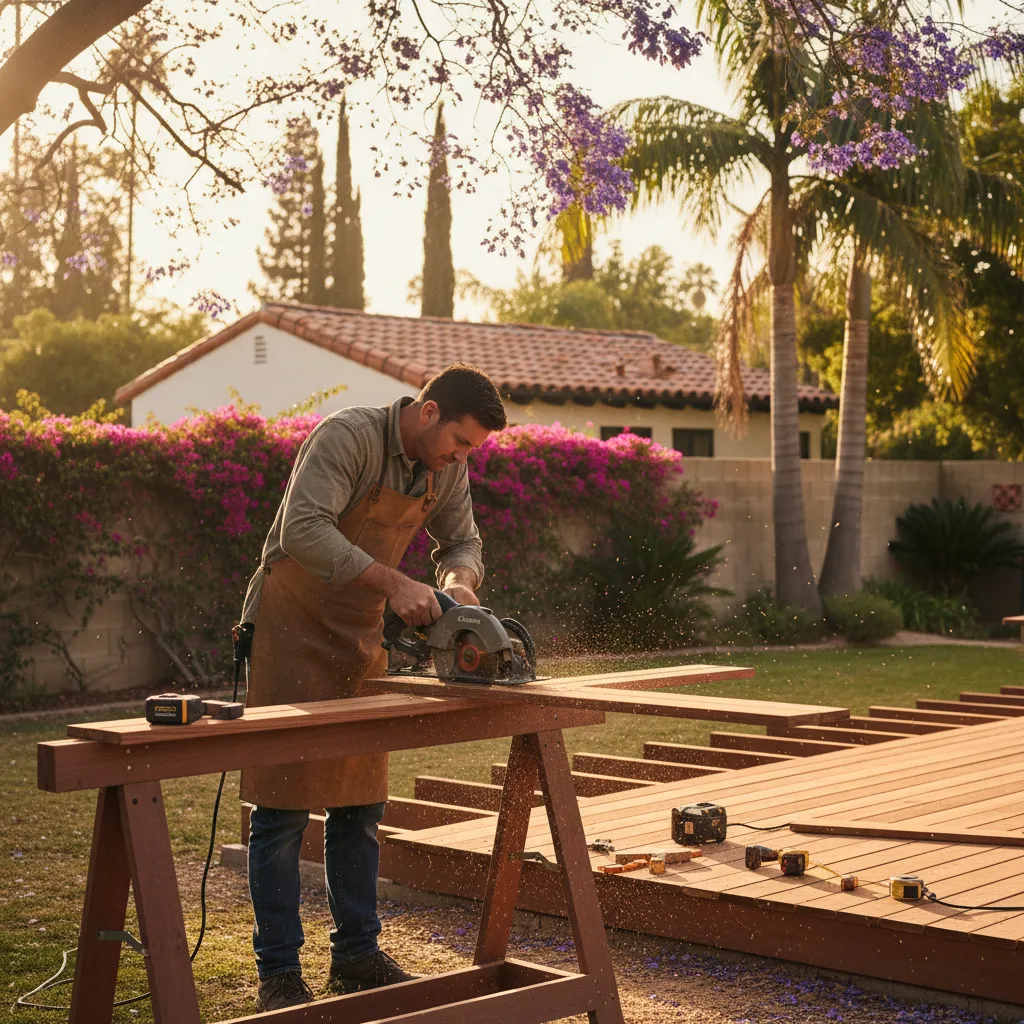
People ask all the time what the actual process looks like. Fair question. Wood deck construction involves a lot more than just screwing boards together, and every step has to pass inspection in Van Nuys before the next one.
Here's how a licensed contractor builds it, start to finish:
- Site layout and footing excavation. The exact deck footprint gets marked using string lines and batter boards. Then footing holes get dug down to the depth your soil report requires. In most of the Valley, that's around 12 inches, but clay-heavy lots near Lake Balboa can need deeper piers.
- Concrete footings and post anchors. Concrete gets poured into each hole and Simpson post bases get set while it's still wet. These anchors keep the wood posts off the ground. That matters a lot here because termites love direct wood-to-soil contact.
- Structural framing. Posts go up first. Then the ledger board gets lag-bolted to your house with flashing behind it to stop water intrusion. Beams sit on top of the posts, joists span across the beams. Joist hangers go at every connection point. No exceptions.
- Decking installation. Boards get fastened to the joists with consistent spacing for drainage. End joints get staggered so the surface looks clean and stays strong.
- Railing and stairs. Code in Los Angeles requires a 42-inch guardrail on any deck 30 inches or more above grade. Posts bolt through the rim joist, not just to the surface.
- Final inspection. The city inspector checks every connection, the railing height, the footing depth, and the ledger attachment. A good contractor doesn't schedule this until it's already been checked.
More often than not, the jobs that fail inspection are ones where someone skipped the flashing behind the ledger board. That single detail causes rot inside your wall. Framing torn open on older homes reveals black mold running two feet in each direction from a missing piece of flashing.
And here's something most homeowners don't realize. According to the International Code Council, a deck ledger connection failure is one of the leading causes of structural deck collapses nationwide. That's why a good contractor treats that attachment like it's the most important part of the build, because it is.
The whole process usually takes five to eight working days for a standard backyard deck. Bigger projects or lots with slope challenges take longer. But every single phase gets done right before the next one.
Passing the City Inspection and What Happens After
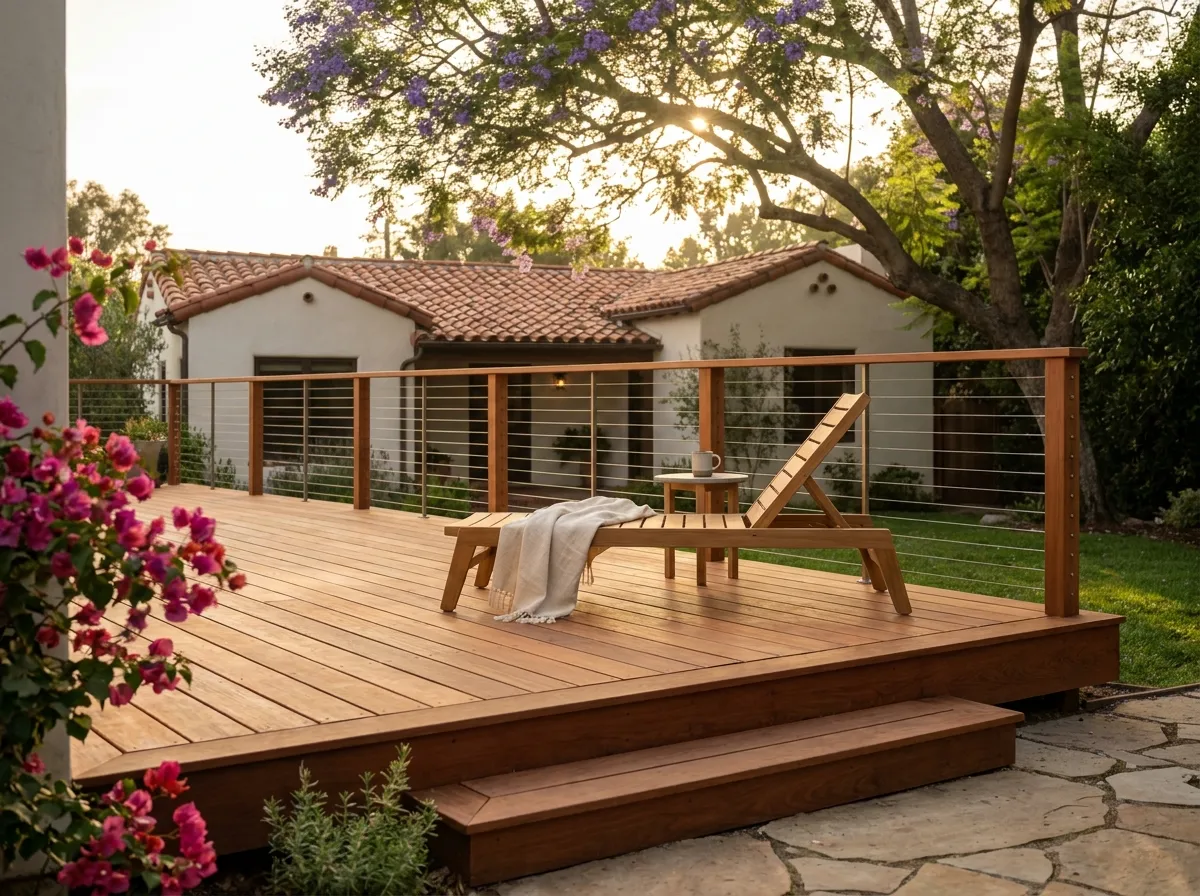
Here's the part most homeowners don't think about until it comes up. Your wood deck construction project isn't done when the last board goes down. It's done when the city says it's done.
Los Angeles requires a final inspection on permitted deck builds. The inspector checks the usual points. They're looking at structural connections, post anchoring, joist hangers, railing height, and proper fastening patterns. A good contractor schedules the inspection and walks the inspector through the build, and more often than not, it passes on the first visit.
What the Inspector Actually Looks At
It's not random. There's a specific checklist, and it goes roughly like this:
- Footings and post bases match the approved plans
- Ledger board attachment meets code for lag bolt spacing and flashing
- Joist spacing and hangers are correct for the span
- Guardrails hit 42 inches with proper baluster spacing
- Stairways have the right rise and run with secure handrails
If something's off, the inspector issues a correction notice. But that almost never happens when the crew builds to plan from day one. A good contractor doesn't treat inspections like a test to hope to pass. They treat them like a formality.
Once you get that signed-off permit card, your deck is officially on record with the city. That matters more than people realize.
A permitted, inspected deck adds real value to your home. According to the National Association of Realtors, outdoor living projects like wood decks consistently rank among the top improvements for cost recovery at resale. Over near Lake Balboa, a backyard deck finished last spring got credited with helping close a sale faster than expected.
And there's one more thing. After the inspection, the contractor does a walkthrough with you — every board, every railing post, every connection point — and shows you how to care for the wood so it holds up through those dry Van Nuys summers. Want help handling the whole process start to finish? Give us a call.
Protecting Your Wood Deck Through Van Nuys Summers and Santa Ana Season
Your deck's biggest enemy isn't rain. It's the sun beating down on it for eight months straight.
Van Nuys summers push temperatures past 100 degrees regularly. That kind of heat dries out wood fast, especially if the deck faces south or west with no shade cover. And then October rolls around. Santa Ana winds blow in hot and bone-dry, pulling whatever moisture is left right out of the boards. There's more cracking and splitting during Santa Ana season than any other time of year.
So what actually keeps a wood deck healthy out here? It starts during construction. A good contractor picks species and grades that handle dry heat well, but the wood still needs a sealed barrier against UV and moisture loss. A quality penetrating sealer soaks into the grain instead of sitting on top. That matters because film-forming products tend to peel and blister in our climate.
What Every Deck Owner Should Know
After a wood deck construction project wraps, a simple maintenance plan keeps it healthy. Here's what protects your investment long-term:
- Reseal every 18 to 24 months with a UV-blocking penetrating sealer
- Sweep off debris regularly so moisture doesn't get trapped between boards
- Check fasteners and joist connections each spring before the heat sets in
- Trim back any plants or trees that hold moisture against the wood
More often than not, the decks that need repair were never sealed after the first year. That's all it takes. One skipped season and the boards start cupping and graying.
Homes near Lake Balboa Park deal with extra dust and grit that grinds into the finish when people walk across it. A quick rinse with a garden hose every couple weeks makes a real difference.
But here's the thing most people don't realize. A well-maintained wood deck in Van Nuys can look great for decades. The climate is tough, sure. It's also predictable. You know the heat is coming, you know the winds are coming, you plan for it. A good contractor builds with that calendar in mind from day one, choosing the right fastener spacing for expansion and the right board orientation to minimize warping. That's what separates a deck that lasts from one that falls apart in five years.